

Best cars for dog owners NZ: the quick answer
A practical dog-friendly car should provide enough usable space for your dog without making everyday loading unnecessarily difficult.
SUVs such as the Toyota RAV4, Mitsubishi Outlander, Kia Sportage, Hyundai Tucson, Honda CR-V and Subaru Forester can provide useful cargo areas and family practicality.
Wagons such as the Subaru Outback, Skoda Octavia Wagon and Toyota Corolla Touring are also worth considering because their longer cargo areas and potentially lower loading heights can work particularly well for dogs.
The right option depends on the size and age of your dog, whether you carry one dog or several, how many people normally travel in the car and what other equipment needs to fit.
If the vehicle will also be your main family car, compare passenger and luggage needs as carefully as the dog's space.
If you're looking at SUVs more broadly, our family SUV finance NZ guide can help you compare purchase and finance considerations.
What makes a good car for a dog owner?
Usable cargo shape
A square, practical load area can be more useful for a dog than a large headline boot figure with an awkward shape.
Loading height
A lower rear opening can make getting in and out easier, especially for smaller, older or less mobile dogs.
Rear access
A wide tailgate opening can make loading a dog, crate or travel equipment more straightforward.
Passenger space
Families need enough room for people as well as the dog and its equipment.
Easy-clean interior
Mud, sand, hair and wet paws can make practical materials and removable cargo protection valuable.
Purchase and running cost
The largest SUV is not necessarily the best choice if a smaller wagon or crossover meets your needs for less money.
SUV or wagon: which is better for a dog?
SUVs and wagons can both make excellent dog cars, but they solve the problem in slightly different ways.
An SUV can provide a tall cargo area, upright seating position and useful family practicality. It may also provide additional ground clearance for owners regularly travelling to beaches, tracks or rural areas.
A wagon can provide a long, wide cargo floor while potentially keeping the loading height lower than a taller SUV.
That lower height can be particularly useful for older dogs or larger breeds that become difficult to lift.
Wagons can also make excellent long-distance vehicles for households that do not need SUV ground clearance.
Choose according to the actual size of the dog, where you drive and what else the vehicle needs to carry.
SUV vs wagon for dog owners
| Consideration | SUV | Wagon |
|---|---|---|
| Cargo height | Often taller | Usually lower but can be long and practical |
| Loading height | Can be higher | Can be easier for some dogs |
| Ground clearance | Potential advantage | Generally more road-focused |
| Family practicality | Strong | Strong |
| Road-trip use | Strong | Strong |
| Large-dog access | Depends on rear opening and height | Potential advantage where the floor is lower |
How much dog-friendly car could fit your budget?
How much dog-friendly car could fit your budget?
Compare different SUV and wagon prices and estimate repayments before deciding how much to spend.
See My Vehicle Budget →1. Subaru Outback
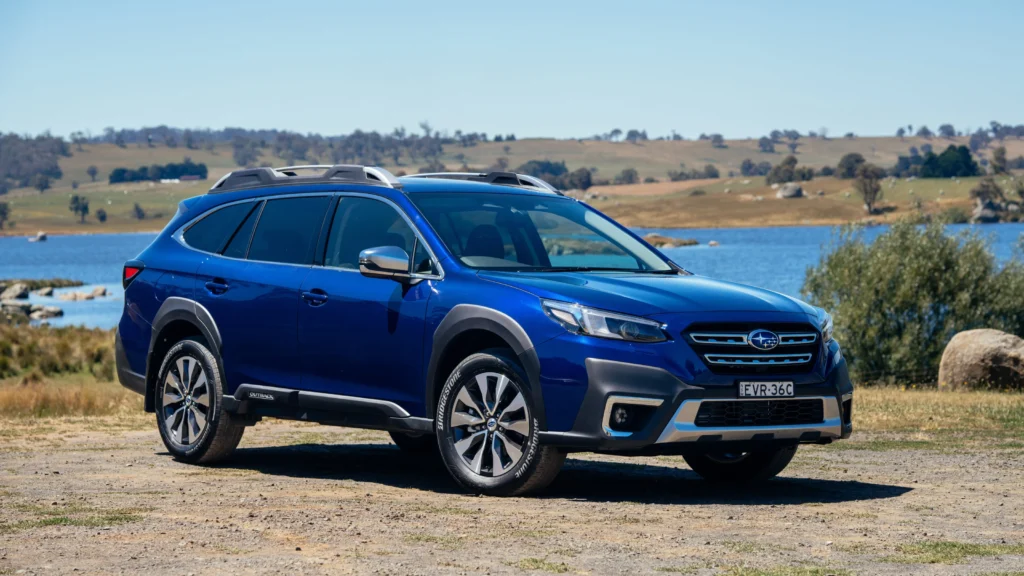
The Subaru Outback is one of the strongest vehicles to consider if you want wagon practicality without giving up all-wheel-drive capability.
Its long cargo area can be useful for dogs, luggage and outdoor equipment, while the wagon-style body can make loading easier than some taller SUVs.
For owners who regularly take their dog to beaches, walking tracks or rural locations, the Outback's additional drivetrain capability can also be useful depending on the conditions.
The Outback can work particularly well for households that want one vehicle for commuting, family use, long-distance travel and weekend trips with the dog.
Before buying, test the rear opening and cargo area with whatever crate, barrier or dog equipment you actually plan to use.
If long journeys are a big part of your driving, our best cars for long-distance driving NZ guide is also worth reading.
2. Toyota RAV4
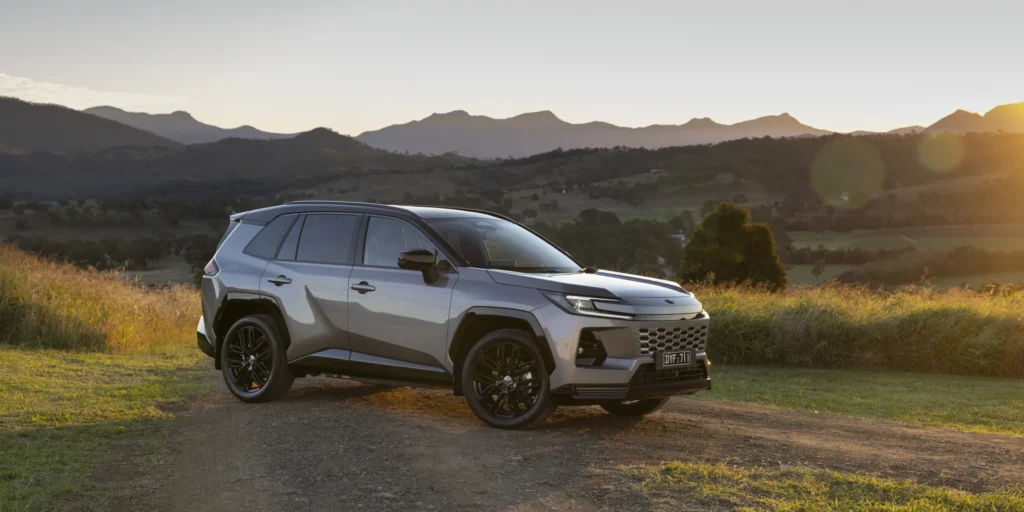
The Toyota RAV4 is a popular medium SUV and can be a practical option for households that need to carry both people and a dog.
Its SUV format gives dog owners a useful rear cargo area without moving into the size of a large seven-seat vehicle.
For a family with one medium or large dog, this can provide a good compromise between everyday dimensions and usable cargo space.
Hybrid variants can also appeal to households that cover substantial annual kilometres, although purchase price should be compared with the expected running-cost difference.
As with every vehicle on this list, physically check whether the cargo area suits your dog rather than relying only on published measurements.
If a RAV4 is already on your shortlist, see our Toyota RAV4 finance NZ guide.
3. Skoda Octavia Wagon
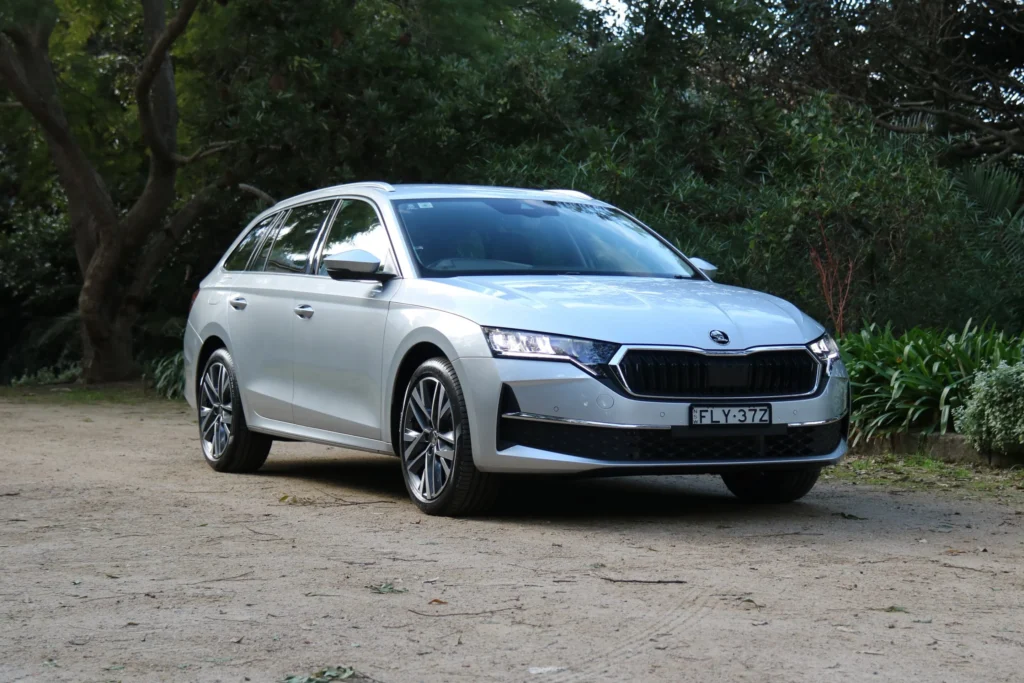
The Skoda Octavia Wagon is worth considering for dog owners who want a long and practical cargo area but do not necessarily want an SUV.
A wagon can make particularly good sense for larger dogs because the rear floor may sit lower than in a tall SUV.
That can reduce the jump required when entering or leaving the vehicle.
The Octavia can also provide useful passenger space while maintaining a road-focused driving experience.
For dog owners who mostly travel on sealed roads and do not need SUV ground clearance, a wagon can provide a lot of practical space without the extra height.
Used examples can also sit at different purchase-price points, so compare condition, service history and the amount you would actually need to finance.
4. Mitsubishi Outlander
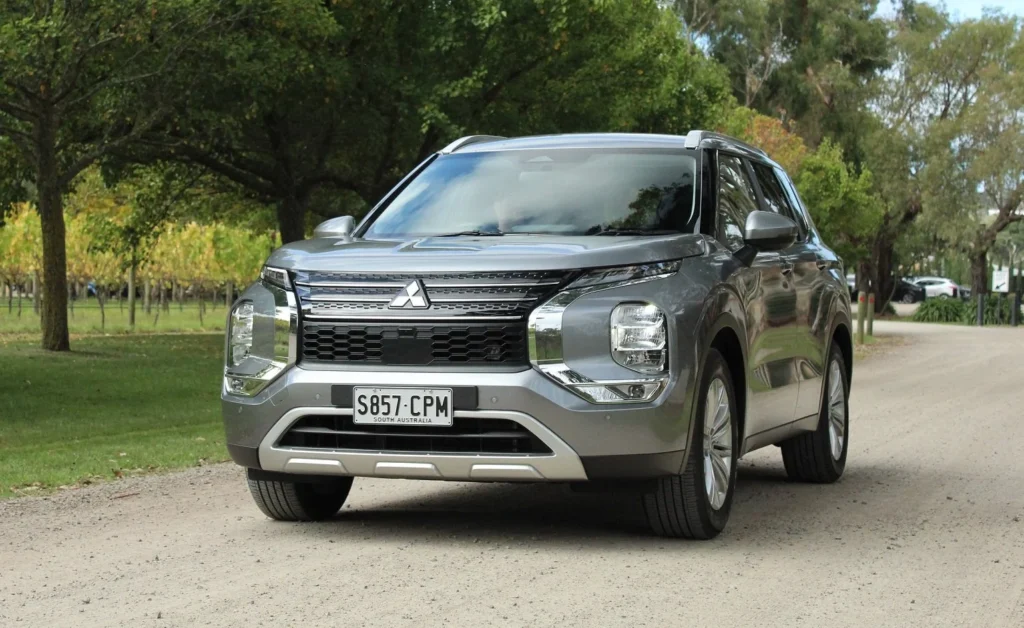
The Mitsubishi Outlander provides another SUV option for dog-owning households that also want passenger flexibility.
Seven-seat versions can be useful where extra passenger positions are occasionally required, although the usable cargo area changes when the third row is raised.
If your dog normally travels in the rear cargo area, think carefully about whether you will regularly need those additional seats.
For many dog owners, keeping the rear row folded may provide the more useful everyday configuration.
The Outlander is also widely represented on the used market, which can provide buyers with a broad range of ages and purchase prices.
For broader used-vehicle borrowing considerations, see our used car finance NZ guide.
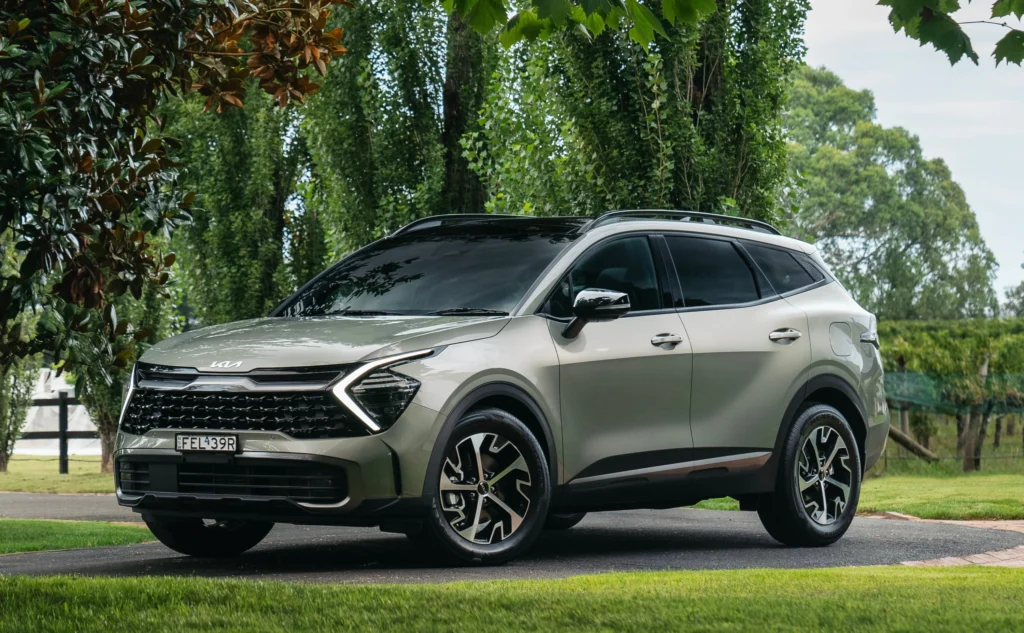
5. Kia Sportage
The Kia Sportage is another medium SUV worth comparing for everyday family and dog use.
Its main appeal is providing an SUV cargo area without moving into the footprint of a very large vehicle.
That can suit households where the dog travels regularly but the vehicle still needs to be easy to park, commute in and use for normal errands.
If you use a dog crate, measure it before shopping and check whether the Sportage's actual rear opening and cargo shape accommodate it comfortably.
For longer journeys, also consider how much luggage space remains once the dog is in position.
The best dog-friendly vehicle should still work for the people who use it every day.
6. Hyundai Tucson
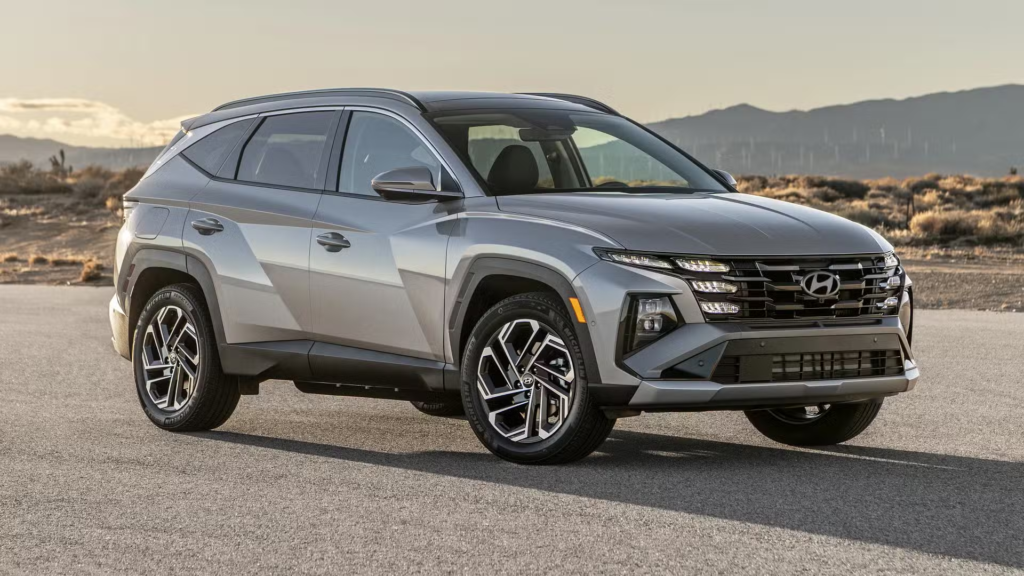
The Hyundai Tucson provides another medium-SUV approach to carrying a dog and family equipment.
It can suit dog owners who want an upright rear cargo area and a vehicle that remains manageable for everyday driving.
Depending on your dog, the important comparison may be cargo-floor dimensions rather than total litres of advertised capacity.
A large dog may value usable floor space more than extra vertical height.
If you're comparing newer hybrid versions with conventional powertrains, consider the purchase-price difference as well as expected fuel use.
Our hybrid car finance NZ guide covers that financial trade-off in more detail.
7. Honda CR-V
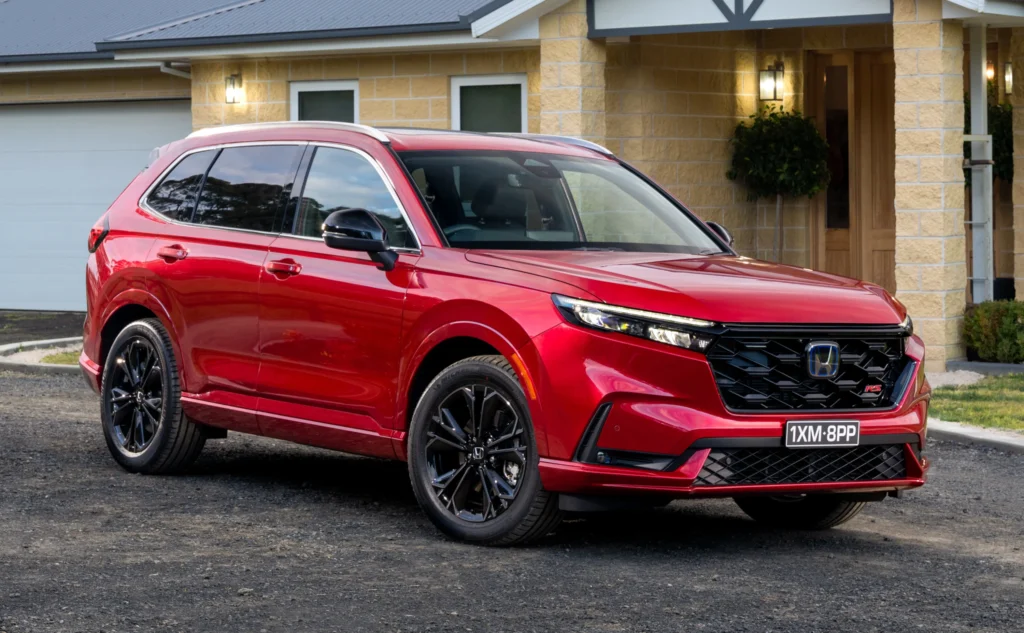
The Honda CR-V has long been a practical family-SUV option and can also be worth considering for dog owners.
The key advantage of this kind of medium SUV is flexibility: rear passenger space and a dedicated cargo area are both available without moving into a large 4WD.
For households with children and a dog, that balance can be more important than outright maximum cargo capacity.
Check the exact generation you intend to buy because interior dimensions, powertrains and features can change between model years.
If purchasing used, service history and general condition should form part of the buying decision rather than choosing purely by price.
8. Subaru Forester
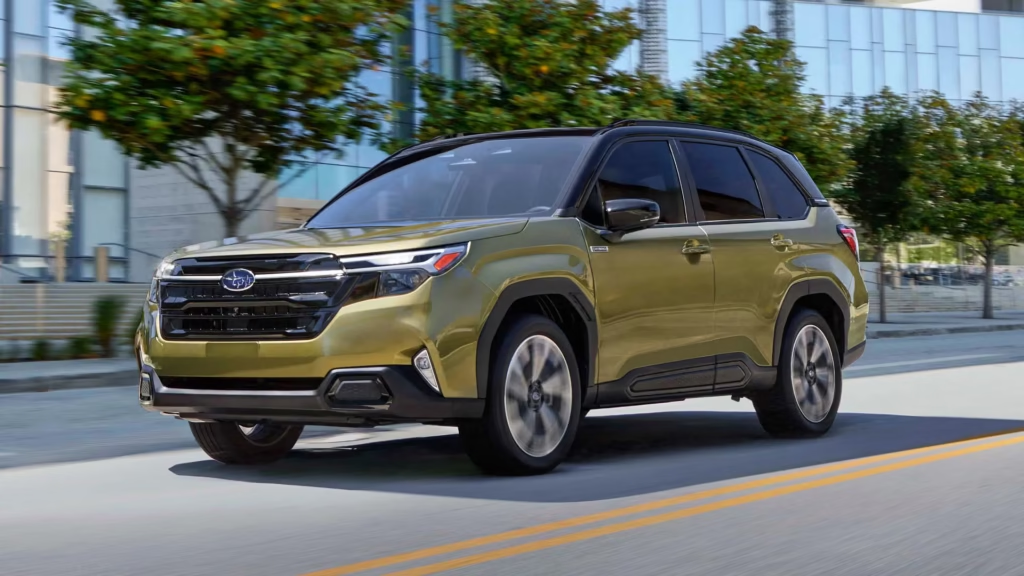
The Subaru Forester can be particularly appealing to dog owners who regularly combine normal family driving with outdoor trips.
Its SUV body and all-wheel-drive format can suit owners travelling to rural properties, tracks, beaches or other destinations where normal road conditions are not always guaranteed.
For a dog owner, visibility and the practical rear cargo area can also make the vehicle easy to live with.
As with the Outback, do not pay extra for capability simply because it sounds useful. If all of your driving is urban and highway based, a conventional road-focused wagon or SUV may perform the same everyday job for less money.
If rural and unsealed-road use is a major priority, our 4WD finance NZ guide provides more detail about choosing additional drivetrain capability.
9. Toyota Corolla Touring
The Toyota Corolla Touring is an interesting option for dog owners who want practical wagon space without buying a large vehicle.
A smaller wagon can make particular sense for one-dog households that do not require a large SUV.
The lower body can also make loading easier for some dogs while retaining a useful rear cargo area.
For commuters, the smaller overall dimensions may be easier to live with during the working week than a large SUV bought primarily for occasional dog trips.
If considering an imported or used example, confirm the exact specification, powertrain and equipment of the individual vehicle before buying.
This is a good example of why the best car for a dog owner is not necessarily the largest car on the shortlist.
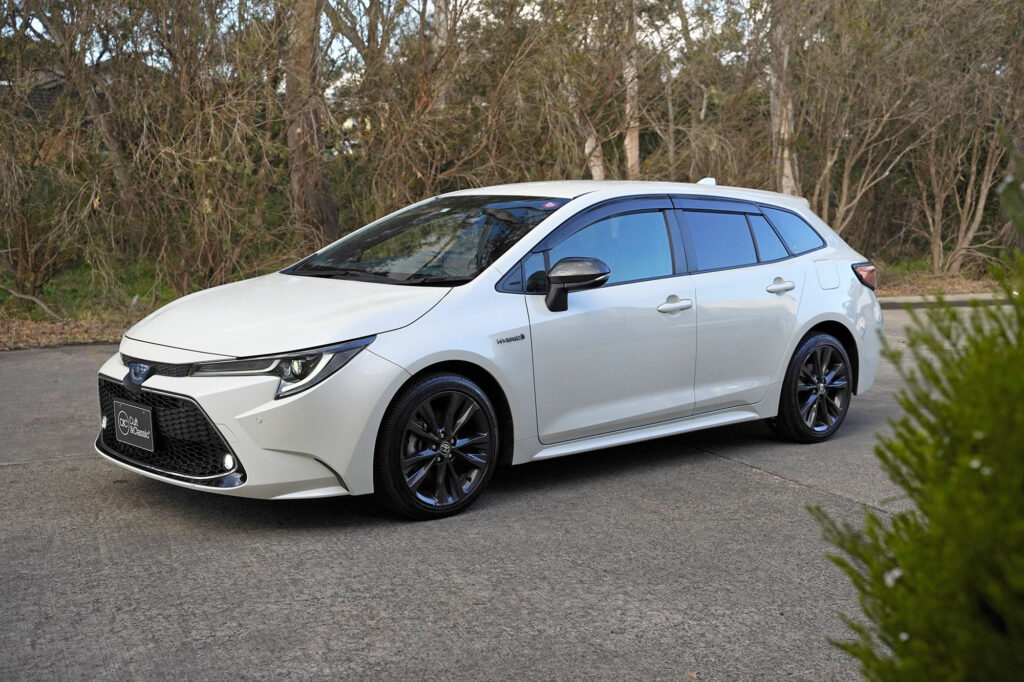
Popular cars for dog owners to compare
| Vehicle | Type | Why consider it? |
|---|---|---|
| Subaru Outback | AWD wagon | Long cargo area and useful outdoor-trip versatility. |
| Toyota RAV4 | Medium SUV | Strong all-round family and dog practicality. |
| Skoda Octavia Wagon | Wagon | Long rear cargo area and potentially easier loading height. |
| Mitsubishi Outlander | SUV | Flexible family SUV with widely available used options. |
| Kia Sportage | Medium SUV | Everyday practicality without moving into a very large vehicle. |
| Hyundai Tucson | Medium SUV | Family-oriented SUV with a useful rear cargo area. |
| Honda CR-V | Medium SUV | Practical family layout and dedicated cargo space. |
| Subaru Forester | AWD SUV | Useful for dog owners combining road use with outdoor travel. |
| Toyota Corolla Touring | Wagon | Smaller wagon option for owners who do not need a large SUV. |
Best car for a large dog
A large dog can make cargo-floor dimensions particularly important.
Look for enough floor area for the dog to sit, lie down and reposition comfortably rather than concentrating only on overall boot volume.
A wide tailgate opening can also make access easier.
Loading height becomes important as the dog gets older because jumping repeatedly into a tall SUV can become increasingly difficult.
Vehicles such as the Subaru Outback, larger medium SUVs and practical wagons can all be worth comparing.
Take the dog's actual size and travel setup into account before choosing the vehicle.
Best car for two dogs
Two dogs can change the cargo-space requirement substantially, particularly if both are medium or large breeds.
Think about whether the dogs travel together in the open cargo area, in separate crates or using another restraint system appropriate for your setup.
Two crates can require much more usable floor area than the dogs themselves.
A longer wagon or medium-to-large SUV can therefore become more attractive than a compact crossover.
Remember to retain room for luggage and other equipment if the vehicle is also used for holidays or family trips.
Best car for an older dog
Older dogs can benefit from a vehicle that is easy to enter and leave.
A very tall SUV may provide a large cargo area but still require a substantial jump.
A wagon or lower crossover can sometimes make access easier while still providing enough space.
A portable ramp can also be useful depending on the dog and vehicle.
If your dog already has reduced mobility, take that into account before purchasing rather than assuming you can solve the problem later.
The vehicle should make everyday trips easier for both the dog and owner.
Best car for dogs and kids
A household carrying children and dogs needs to think about how the entire cabin works together.
If the dog occupies the cargo area, passenger luggage still needs somewhere to go.
A family holiday can quickly expose a vehicle that seems spacious during normal weekly use.
Medium SUVs such as the RAV4, Tucson, Sportage and CR-V can provide a useful compromise for smaller families.
Larger families may need to compare seven-seat vehicles, especially if passenger numbers regularly exceed five.
Our 7-seater finance NZ guide is useful if additional seats are an important part of the decision.
Boot space with a dog is different from normal boot space
A published boot-capacity figure does not tell you exactly how useful the space will be for a dog.
A sloping tailgate, wheel-arch intrusion, high cargo floor or narrow opening can all reduce usable space.
Dogs also need practical floor area rather than simply litres of volume extending upward toward the roof.
If you use a crate, measure the crate's length, width and height and check the actual opening as well as the interior cargo dimensions.
The most reliable test is to physically inspect the exact vehicle you plan to buy.
Dog-friendly features worth checking
Wide tailgate opening
Makes it easier to load dogs, crates and travel equipment.
Flat cargo floor
Can provide a more usable area for the dog to settle.
Low loading lip
Can make entry easier for older, smaller or less mobile dogs.
Rear ventilation
Consider how well air reaches the cargo or rear passenger area.
Cargo protection
Removable mats and liners can make mud, sand and hair easier to manage.
Passenger flexibility
Make sure dog space does not remove the seating or luggage room your household regularly needs.
Dog crate or open cargo area?
How your dog travels can have a major effect on which vehicle works best.
A travel crate has fixed dimensions, so the cargo opening and floor space need to accommodate it properly.
A vehicle that looks spacious can still have an opening that makes a particular crate difficult to load.
If the dog travels using another appropriate restraint arrangement, the layout requirements may be different.
Choose and use travel restraints or containment appropriate to your dog, vehicle and applicable requirements.
The vehicle-purchasing decision should be based on the travel setup you actually intend to use.
What about muddy dogs, beaches and walking tracks?
Dog ownership can be hard on a vehicle interior, particularly if trips regularly involve beaches, bush walks, parks or wet winter conditions.
A practical cargo liner, removable mat or other suitable protection can make the vehicle much easier to keep clean.
Dark or hard-wearing materials can also be easier to live with than delicate finishes.
If muddy trips are part of normal life, choose the vehicle with that reality in mind rather than how clean it looks in the showroom.
For owners frequently travelling beyond sealed roads, drivetrain and ground clearance may also become relevant.
Do dog owners need AWD or 4WD?
No. Owning a dog does not automatically mean you need AWD or 4WD.
If most trips are to suburban parks, beaches with sealed access and normal walking areas, a conventional road-focused vehicle can be completely suitable.
AWD or 4WD becomes more relevant where your normal destinations involve rural roads, rough tracks or lower-traction surfaces.
Additional drivetrain capability can increase the purchase price, weight and potentially other ownership costs.
Buy it because your actual driving requires it rather than simply because you enjoy outdoor activities.
Our 4WD finance NZ guide explains that distinction in more detail.
Best dog-friendly car for road trips
Road trips with a dog require more than enough room in the boot.
Consider how comfortably the passengers travel, where luggage goes, how frequently you stop and whether the dog has enough usable space.
A wagon such as the Outback or a medium SUV such as the RAV4 can provide useful versatility for this type of travel.
Fuel or energy efficiency also matters more when trips regularly involve hundreds of kilometres.
If road trips form a large part of your driving, see our best cars for long-distance driving NZ guide.
Should you buy a bigger SUV just for the dog?
Not necessarily.
A larger SUV can provide additional cargo space, but you pay for the whole vehicle every day even when the dog is not aboard.
If one dog fits comfortably in a medium SUV or wagon, moving to a much larger vehicle may add purchase price, fuel use, tyre costs and parking inconvenience without providing much additional value.
Work out what space you genuinely need and buy around that requirement.
A smaller practical wagon can sometimes make a better dog car than a much larger SUV with an awkward cargo layout.
How much should you spend on a dog-friendly car?
Your dog does not need the most expensive vehicle you can qualify to finance.
Start with your household income, regular expenses and existing financial commitments.
Then consider the running cost of the vehicle itself, including fuel or electricity, insurance, servicing, tyres and repairs.
Set a vehicle budget that provides enough practicality without stretching your wider finances.
Our how much can I borrow for a car loan NZ guide can help you think about borrowing power before you choose a purchase price.
Example dog-friendly car repayments at 8.45% p.a. over 5 years
| Amount financed | Approx. monthly repayment |
|---|---|
| $15,000 | $307 |
| $20,000 | $410 |
| $25,000 | $512 |
| $30,000 | $615 |
| $40,000 | $820 |
| $50,000 | $1,025 |
| $60,000 | $1,230 |
What those dog-car repayment examples mean
The repayment table shows why practical requirements should be separated from simply buying a larger vehicle.
At the same indicative rate and term, increasing the amount financed from $25,000 to $50,000 roughly doubles the monthly repayment.
If both vehicles comfortably accommodate your dog and household, that difference deserves careful consideration.
A more expensive SUV may still provide features, age, comfort or capability you value, but the benefit should justify the additional borrowing.
These examples use an indicative 8.45% p.a. rate over five years and exclude applicable fees.
Your actual rate and repayment may be lower or higher following lender assessment.
Our car loan repayments NZ guide explains repayments in more detail.
Compare repayments on your dog-friendly car shortlist
Compare repayments on your dog-friendly car shortlist
Enter the amount you would need to finance for each vehicle and compare estimated repayments using the same rate and term.
Compare Car Repayments →New vs used car for a dog owner
Dog owners can find very practical vehicles at a wide range of used prices.
Buying used can reduce the amount financed significantly compared with purchasing a new equivalent.
A used vehicle may also make cosmetic wear from dog ownership feel less concerning than it would in a brand-new vehicle.
However, condition, servicing and previous ownership still matter.
Check the rear cargo area carefully for water damage, broken trim, worn seat mechanisms or other issues in addition to normal mechanical checks.
Consider an appropriate pre-purchase inspection before buying.
Our used car finance NZ guide explains used-vehicle finance in more detail.
Can you buy a dog-friendly car privately?
Potentially, and the used private market can contain many practical wagons and SUVs.
If finance is required, private-sale vehicle finance can involve additional information about the seller and vehicle before settlement.
The buying checks remain important regardless of how the vehicle is financed.
Confirm ownership, vehicle history and condition and consider an appropriate pre-purchase inspection.
Our private sale car finance NZ guide explains private-sale vehicle finance in more detail.
Should you put a deposit on your next dog-friendly car?
A deposit can reduce the amount you need to finance.
That generally reduces the repayment when the other finance assumptions remain unchanged.
For example, contributing $5,000 towards a $30,000 vehicle means the starting finance requirement may be closer to $25,000 before applicable costs.
However, consider whether using a large amount of savings leaves your household without an appropriate emergency reserve.
Our car loan deposit NZ guide explains the deposit decision in more detail.
Can you finance a dog-friendly car with no deposit?
Potentially, subject to the applicant, vehicle and relevant lender criteria.
No-deposit finance generally means more of the purchase price is being financed.
That creates a larger loan balance than purchasing the same car with a deposit.
Compare the resulting repayment with your household budget and complete ownership costs before deciding.
Our no deposit car finance NZ guide covers no-deposit vehicle finance in more detail.
What loan term makes sense?
The appropriate loan term depends on the vehicle, your budget and available finance.
A longer term generally reduces the regular repayment while potentially increasing total interest.
A shorter term generally increases the repayment but repays the debt sooner.
If purchasing an older used wagon or SUV, consider the age the vehicle will be when the finance ends.
Our car loan terms NZ guide explains shorter and longer loan terms in more detail.
What interest rate could you get?
There is no specific car-loan rate for dog owners or family SUVs.
AutoLoan uses 8.45% p.a. as an indicative default calculator rate so different vehicles can be compared consistently.
This is not a guaranteed Simplify or lender rate.
Your actual interest rate is determined by the relevant lender following assessment and may be lower or higher.
Applicant circumstances, credit information, income, expenses, existing debts, loan amount and vehicle can all be relevant.
Our car loan interest rates NZ guide explains car-loan rates in more detail.
Should you get pre-approved before shopping?
An initial or conditional finance assessment can help establish an indicative vehicle budget before you start comparing SUVs and wagons.
That can prevent your search moving from a practical $25,000 used wagon into a $50,000 SUV simply because you start shopping without a clear budget.
Final approval can still depend on the particular vehicle and lender assessment.
Our car finance pre-approval NZ guide explains the process in more detail.
How to choose a car for your dog
Measure your dog or crate
Understand how much usable floor area and height your travel setup actually requires.
Decide SUV or wagon
Compare higher cargo space with lower loading height and longer wagon floors.
Check the rear opening
Make sure the dog or crate can actually pass through the tailgate comfortably.
Think about the dog's age
Loading height can become increasingly important as dogs get older.
Include the family
Make sure dog space does not remove the passenger or luggage capacity you need.
Choose your budget
Compare vehicles that genuinely meet your needs rather than simply buying the largest available SUV.
Inspect used vehicles
Check condition, service history and the cargo area before purchasing.
Compare finance
Use the same rate and term to understand what different vehicle prices mean for repayments.
Found the right car for you and your dog?
Found the right car for you and your dog?
AutoLoan partners with Simplify Finance to help Kiwis explore vehicle-finance options from its panel of 10+ lenders, subject to lender criteria and approval.
Get My Car Loan Match →Best cars for dog owners NZ: key things to remember
The best dog-friendly car is the one that suits your dog's size and mobility while still working for the rest of your household.
Subaru Outback, Toyota RAV4, Skoda Octavia Wagon, Mitsubishi Outlander, Kia Sportage, Hyundai Tucson, Honda CR-V, Subaru Forester and Toyota Corolla Touring all provide different approaches worth comparing.
Do not judge dog practicality using boot litres alone. Cargo-floor dimensions, tailgate opening and loading height can matter more.
A wagon can be particularly useful where lower access is important, while an SUV can provide additional cargo height and ground clearance.
You do not automatically need AWD or 4WD simply because you regularly travel with a dog.
Families should consider how much luggage room remains once both children and the dog are aboard.
Compare the additional borrowing required for a larger SUV with the practical benefit it actually provides.
AutoLoan uses 8.45% p.a. as an indicative calculator rate only and it is not a guaranteed lender rate.
AutoLoan is not a lender. Vehicle-finance applications are handled by Simplify Finance and the relevant lender determines approval, rates, amounts and terms.
For related reading, see our Toyota RAV4 finance NZ guide, family SUV finance NZ guide, best cars for long-distance driving NZ guide, 7-seater finance NZ guide, used car finance NZ guide, car loan repayments NZ guide and how much can I borrow for a car loan NZ guide.
Frequently Asked Questions
What are the best cars for dog owners in NZ?
Vehicles worth comparing include the Subaru Outback, Toyota RAV4, Skoda Octavia Wagon, Mitsubishi Outlander, Kia Sportage, Hyundai Tucson, Honda CR-V, Subaru Forester and Toyota Corolla Touring. The best option depends on the dog, household and driving requirements.
What is the best SUV for dog owners?
Medium SUVs such as the Toyota RAV4, Mitsubishi Outlander, Kia Sportage, Hyundai Tucson, Honda CR-V and Subaru Forester are all worth comparing. Check actual cargo dimensions and loading height rather than relying only on boot-capacity figures.
What is the best wagon for dogs?
The Subaru Outback, Skoda Octavia Wagon and Toyota Corolla Touring are examples worth considering. Wagons can provide long cargo areas and potentially lower loading heights than SUVs.
Is a Subaru Outback good for dogs?
The Subaru Outback can be a practical option because it combines wagon cargo space with all-wheel-drive capability and useful long-distance practicality.
Is a Toyota RAV4 good for dogs?
The RAV4 can suit households needing medium-SUV passenger and cargo practicality. Check the exact vehicle's rear opening and cargo dimensions against your dog's requirements.
Is a Subaru Forester good for dogs?
The Forester can be worth considering for dog owners wanting an SUV with all-wheel-drive capability and a practical cargo area.
Is a wagon or SUV better for a large dog?
It depends on the particular vehicles. A wagon can offer a lower loading height and long floor, while an SUV may provide more cargo height. Check the dog's actual space and access requirements.
What car is best for an older dog?
A vehicle with a lower cargo floor and easy rear access can be helpful for older dogs. Wagons and lower crossovers may be easier to enter than particularly tall SUVs.
What car is best for two dogs?
Two medium or large dogs can require substantial usable floor area. Longer wagons and medium-to-large SUVs are worth comparing, particularly if crates are used.
What car is best for dogs and kids?
A medium SUV or practical wagon can work well for smaller families. Larger families should also consider how many passenger seats and how much luggage space remain once the dog is aboard.
Should I measure a dog crate before buying a car?
Yes. Measure the crate's length, width and height and confirm that it fits through the rear opening as well as inside the cargo area.
Is boot capacity in litres useful for choosing a dog car?
It can provide a general comparison, but usable floor dimensions, tailgate shape and loading height may be more important for a dog.
Do I need AWD for a dog-friendly car?
Not necessarily. AWD can be useful if your regular destinations involve lower-traction surfaces, but ordinary road-focused vehicles can be entirely suitable for most dog owners.
Do I need a 4WD to take my dog to the beach?
Not automatically. It depends on the actual access and surface where you drive. Do not drive onto terrain simply because a vehicle has AWD or 4WD without understanding the conditions and applicable rules.
Is a bigger SUV always better for dogs?
No. A smaller wagon or medium SUV may comfortably meet your dog's needs while costing less to purchase and operate.
What should I check when test driving a car for my dog?
Check the rear opening, loading height, usable cargo floor, ventilation, passenger space and how your crate or travel setup fits.
Can I finance a used dog-friendly car?
Potentially. Used-vehicle finance remains subject to the applicant, vehicle and lender criteria.
Can I finance a Toyota RAV4?
Potentially, subject to lender criteria and approval. AutoLoan also has a dedicated Toyota RAV4 finance guide.
Can I finance a used Subaru Outback?
Potentially. Finance availability depends on the applicant, particular vehicle and relevant lender criteria.
Can I finance a car bought privately?
Potentially. Private-sale vehicle finance can require additional seller and vehicle information and remains subject to lender criteria.
Can I get a dog-friendly car with no deposit?
Potentially, depending on the applicant, vehicle and lender. Financing more of the purchase price creates a larger starting loan balance.
Should I put a deposit on my next car?
A deposit can reduce the amount financed and resulting repayments, but consider whether you also need to retain an appropriate emergency savings buffer.
How much would a $20,000 car loan cost?
At an illustrative 8.45% p.a. over five years, $20,000 is approximately $410 per month before applicable fees.
How much would a $25,000 car loan cost?
At an illustrative 8.45% p.a. over five years, $25,000 is approximately $512 per month before applicable fees.
How much would a $30,000 car loan cost?
At an illustrative 8.45% p.a. over five years, $30,000 is approximately $615 per month before applicable fees.
How much would a $40,000 car loan cost?
At an illustrative 8.45% p.a. over five years, $40,000 is approximately $820 per month before applicable fees.
What interest rate could I get?
The actual rate is determined by the relevant lender following assessment. AutoLoan uses 8.45% p.a. as an indicative calculator rate only and it is not a guaranteed rate.
Should I get finance pre-approved before choosing a car?
An initial or conditional assessment can help establish an indicative vehicle budget, although final approval can still depend on the vehicle and lender assessment.
Can Simplify compare finance options for my next car?
AutoLoan partners with Simplify Finance, which handles vehicle-finance applications and can assess options from its panel of 10+ lenders, subject to lender criteria and approval.
Does AutoLoan provide car loans?
No. AutoLoan.nz is not a lender. Finance applications through AutoLoan are handled by Simplify Finance and the relevant lender determines approval, rates, loan amounts and terms.
This article provides general information only and does not constitute financial, veterinary, animal-safety, mechanical or legal advice, finance pre-approval, or an offer or guarantee of credit. Vehicle dimensions, cargo areas, features, powertrains and equipment vary by model, variant and model year and should be confirmed for the exact vehicle being considered. Dog size, mobility and travel requirements vary, and owners should choose an appropriate travel and restraint setup for their particular animal and vehicle. Finance examples are illustrative only and use an indicative rate of 8.45% p.a. unless stated otherwise. They exclude applicable fees and other costs. Your actual interest rate, repayments, loan amount, fees, terms and eligibility are determined by the relevant lender following assessment and may differ. AutoLoan.nz is not a lender and does not make lending decisions. Finance applications through AutoLoan are handled by our finance partner Simplify Finance and remain subject to lender assessment, criteria and approval.