

Hybrid car finance NZ: the quick answer
New and used hybrid vehicles can potentially be financed subject to the applicant, vehicle and lender criteria.
The amount you need to borrow depends on the hybrid's purchase price, your deposit, any positive trade-in equity and applicable finance costs.
Before choosing a hybrid, compare the amount you would need to finance with an equivalent petrol vehicle and consider whether the difference makes sense for how much you drive.
AutoLoan lets you estimate hybrid repayments and borrowing power using an indicative default rate of 8.45% p.a., then explore finance through our partner Simplify.
What affects hybrid car finance?
Hybrid purchase price
A higher vehicle price generally means more borrowing if your deposit remains the same.
Deposit
Money contributed upfront can reduce your starting loan balance.
Trade-in equity
Positive equity in your existing car may contribute towards the hybrid purchase.
Interest rate
Your actual approved rate affects both regular repayments and total borrowing cost.
Loan term
The repayment period changes the size of regular payments and total interest.
Vehicle type
A conventional hybrid and a plug-in hybrid can have different purchase prices and running-cost considerations.
How much hybrid could fit your budget?
How much hybrid could fit your budget?
Estimate your indicative borrowing power before deciding whether you're shopping for an affordable used hybrid, a newer hybrid SUV or a plug-in hybrid.
See My Hybrid Borrowing Power →How much does a hybrid car cost in New Zealand?
Hybrid prices vary enormously because New Zealand buyers can choose between older Japanese imports, locally sold used hybrids, newer hatchbacks and sedans, hybrid SUVs and plug-in hybrids.
Age, kilometres, specification, battery condition, brand, body style and whether the vehicle is an HEV or PHEV can all influence purchase price.
An older used Toyota Aqua may therefore require far less finance than a late-model hybrid SUV.
The useful number for finance purposes is not simply the advertised purchase price. It is the amount you actually need to borrow after your deposit or trade-in contribution is taken into account.
Comparing that amount with a petrol alternative can help you see what premium, if any, you are financing to choose the hybrid.
If you are also considering a fully electric vehicle, our EV finance NZ guide explains EV borrowing, repayments, charging and ownership-cost considerations.
What type of hybrid are you considering?
| Vehicle type | How it works | Finance and ownership consideration |
|---|---|---|
| Conventional petrol hybrid | Petrol engine plus electric motor and battery; no external charging required | Compare any purchase-price premium with expected fuel savings. |
| Plug-in petrol hybrid | Can drive using externally charged electricity as well as petrol | Consider purchase price, ability to charge regularly and applicable RUC. |
| Used Japanese import hybrid | Often provides a lower purchase-price entry point | Age, battery condition, history and import-specific specifications deserve attention. |
| Hybrid SUV | Hybrid drivetrain in a larger SUV body | Can reduce fuel use relative to some alternatives but may still carry a substantial purchase price. |
| Older used hybrid | Can substantially reduce the amount financed | Battery condition and maintenance become increasingly relevant. |
HEV vs PHEV: what's the difference?
A conventional hybrid electric vehicle, or HEV, combines a combustion engine with an electric motor and battery but does not need to be plugged into an external charger.
A plug-in hybrid electric vehicle, or PHEV, has a battery that can be charged from an external electricity source and can generally travel some distance using externally supplied electricity.
That difference matters financially because a PHEV can have a different purchase price, charging requirement and road-user-charge treatment from a conventional petrol hybrid.
The best choice depends on your driving pattern, access to charging and the actual vehicles you are comparing.
Do not assume a plug-in hybrid is automatically the cheapest option simply because it can drive on electricity.
Do conventional petrol hybrids pay Road User Charges in NZ?
Conventional petrol hybrids that cannot be plugged into an external electricity source do not currently need to buy Road User Charges because fuel excise duty is already collected when petrol is purchased.
That is different from plug-in hybrids, which fall within New Zealand's electric-vehicle RUC system.
RUC rules and rates can change, so always check current NZ Transport Agency information when comparing ownership costs.
For finance budgeting, the important point is that two vehicles both described as hybrids can have different road-use costs depending on how they are powered.
Do plug-in hybrids pay RUC in NZ?
Yes. Light plug-in hybrids that meet the relevant criteria are subject to Road User Charges in New Zealand.
Plug-in petrol hybrids currently pay a reduced RUC rate compared with battery-electric vehicles because petrol purchases also include fuel excise duty.
This means the running-cost comparison between a PHEV and a conventional petrol hybrid needs to include RUC as well as petrol and electricity.
Do not evaluate a PHEV purely by its electric driving capability or advertised fuel consumption.
Check current official NZTA RUC rates when building your budget.
See what your hybrid repayments could be
See what your hybrid repayments could be
Enter the amount you expect to finance and compare indicative hybrid repayments using 8.45% p.a. as the default calculator rate.
Calculate Hybrid Repayments →How much are hybrid car loan repayments?
Hybrid repayments depend on the amount financed, your actual interest rate, loan term, repayment frequency and applicable finance costs.
A buyer financing $15,000 for an older used hybrid will have a very different repayment from someone financing $45,000 for a newer hybrid SUV.
A deposit or positive trade-in equity can reduce the amount borrowed.
The most useful comparison is often between the hybrid and the petrol vehicle you would otherwise buy.
AutoLoan uses 8.45% p.a. as its default indicative calculator rate. Your actual rate may be higher.
Our car loan repayments guide explains repayments in more detail.
Example hybrid finance amounts
| Hybrid price | Deposit or trade-in | Approx. amount financed |
|---|---|---|
| $15,000 | $3,000 | $12,000 |
| $20,000 | $4,000 | $16,000 |
| $25,000 | $5,000 | $20,000 |
| $35,000 | $7,000 | $28,000 |
| $45,000 | $10,000 | $35,000 |
| $55,000 | $10,000 | $45,000 |
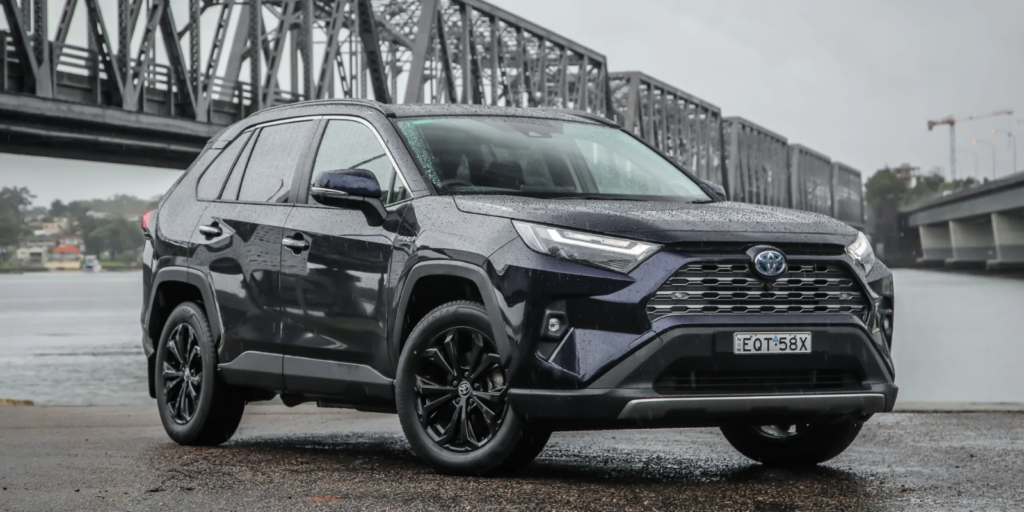
Example hybrid repayments at 8.45% p.a. over 5 years
| Amount financed | Approx. weekly | Approx. fortnightly | Approx. monthly |
|---|---|---|---|
| $20,000 | $95 | $189 | $410 |
| $30,000 | $142 | $284 | $615 |
| $40,000 | $189 | $378 | $820 |
| $50,000 | $237 | $473 | $1,025 |
| $60,000 | $284 | $568 | $1,230 |
Should you borrow more to buy a hybrid?
This is one of the most important financial questions for a hybrid buyer.
If a hybrid costs more than the petrol vehicle you would otherwise purchase, the difference is effectively an additional amount you need to fund.
For example, if the petrol vehicle costs $30,000 and the hybrid alternative costs $36,000, the hybrid represents a $6,000 purchase-price premium before considering your deposit.
Put that additional amount through the repayment calculator, then compare it with your likely fuel-use difference over the period you expect to own the vehicle.
The answer can be different for someone driving 25,000 kilometres a year than for someone driving only 6,000 kilometres.
Hybrid purchase premium: what are you really financing?
| Petrol vehicle | Comparable hybrid | Extra purchase price |
|---|---|---|
| $20,000 | $23,000 | $3,000 |
| $25,000 | $29,000 | $4,000 |
| $30,000 | $35,000 | $5,000 |
| $40,000 | $46,000 | $6,000 |
| $50,000 | $58,000 | $8,000 |
A hybrid's fuel savings need to be compared with its finance cost
A hybrid may use less petrol than a comparable conventional vehicle, but fuel savings are only one side of the financial equation.
If the hybrid costs more to buy, that additional amount can increase your loan balance, repayments and total interest.
That does not mean buying the hybrid is a poor decision. It means the comparison should include both purchase and running costs.
The more kilometres you drive, the more important fuel consumption can become.
For a low-mileage driver, purchase price may carry greater weight than potential fuel savings.
New vs used hybrid finance
A new hybrid can provide newer technology, lower kilometres and manufacturer support, but usually carries a higher purchase price than many used alternatives.
A used hybrid can substantially reduce the amount financed, which can make hybrid ownership accessible at much lower price points.
However, as the vehicle ages, service history, general condition and hybrid-battery condition become increasingly relevant.
The cheapest used hybrid is not automatically the cheapest vehicle to own.
Our used car finance guide explains used-vehicle finance in more detail.
New vs used hybrid: what changes financially?
| Consideration | Newer hybrid | Older used hybrid |
|---|---|---|
| Purchase price | Usually higher | Can be substantially lower |
| Finance amount | Potentially larger | Potentially smaller |
| Kilometres | Generally lower | Can vary considerably |
| Battery age | Newer | Worth investigating |
| Maintenance history | Limited previous use | Service history becomes important |
| Repair reserve | Potentially lower initially | Allow more room for age-related costs |
Does hybrid battery condition matter when buying used?
Yes. The hybrid battery is one of the vehicle systems worth considering when assessing an older used hybrid.
Finance approval does not mean the hybrid battery has been inspected or certified as healthy.
The practical importance of battery condition increases as a vehicle gets older and accumulates kilometres.
Where appropriate, ask for information about the hybrid system and consider an independent inspection by someone familiar with the particular type of hybrid.
Any remaining manufacturer or dealer warranty should also be checked rather than assumed.
What to check on a used hybrid
Hybrid battery
Consider battery condition and any available diagnostic or health information.
Service history
Maintenance records can help show how the vehicle has been cared for.
Kilometres
Compare the odometer reading with the vehicle's age and condition.
Warning lights
Any hybrid-system or dashboard warnings deserve investigation before purchase.
Vehicle history
Complete appropriate ownership, damage and security checks.
Pre-purchase inspection
Finance approval should not be treated as a mechanical or hybrid-system inspection.
Japanese import hybrid finance NZ
Used Japanese-import hybrids make up an important part of New Zealand's used-car market.
Models such as the Toyota Aqua have given buyers access to hybrid vehicles at relatively affordable purchase prices.
Import status does not automatically prevent a vehicle from being financed, but lender vehicle criteria still apply.
Before purchasing, understand the exact model, specification, service information and condition of the vehicle rather than assuming it is identical to a New Zealand-new version.
Our Toyota Aqua finance guide covers one popular used-import hybrid in more detail.
New Zealand-new vs imported hybrid
Both New Zealand-new and imported hybrids can potentially offer good buying options, but they should be evaluated as individual vehicles.
A New Zealand-new vehicle may have locally documented service history and specifications that are easier to verify.
An imported hybrid can offer strong value but may have different trim, equipment or documentation.
For finance, the lender's vehicle criteria and the actual amount being borrowed matter more than whether the badge says hybrid.
For the buyer, history, condition and suitability matter just as much as purchase price.
Hybrid SUV finance NZ
Hybrid SUVs combine the practicality and seating position of an SUV with a petrol-electric drivetrain.
They can appeal to families and commuters who want a larger vehicle while reducing petrol consumption compared with some conventional alternatives.
However, hybrid SUVs can also carry substantially higher purchase prices than small used hybrids.
That means the amount financed can be significant even when fuel consumption is relatively low.
Compare the complete vehicle purchase and finance cost rather than treating low fuel use as a reason to ignore the purchase price.
Families comparing larger hybrid vehicles can also use our family SUV finance NZ guide, while buyers who specifically need three rows can compare our 7-seater finance NZ guide.
Compare your hybrid and petrol options
Compare your hybrid and petrol options
Enter the amount you would need to finance for each vehicle using the same rate and term to see what the actual repayment difference could be.
Compare Hybrid Repayments →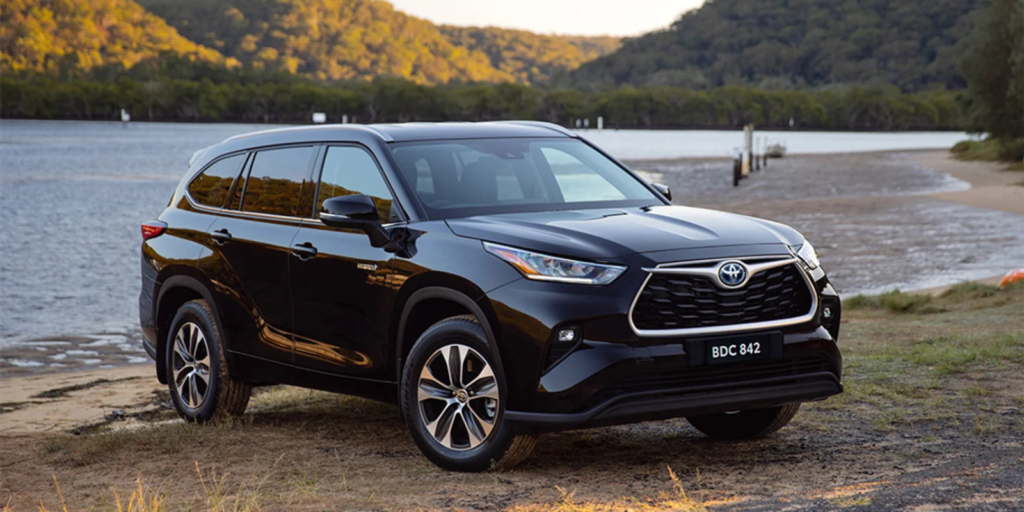
Does a conventional hybrid need to be plugged in?
No. A conventional petrol-electric hybrid does not need to be connected to an external charger.
The vehicle manages its battery through the hybrid drivetrain and regenerative braking.
This can make a conventional hybrid attractive to buyers who want lower petrol use without installing or regularly using charging equipment.
A PHEV is different because external charging is part of how it is designed to be used.
Understand which type of hybrid you are buying before comparing running costs.
If you are deciding between a conventional hybrid and going fully electric, see our EV finance NZ guide for the finance and ownership differences that apply to EVs.
Does a PHEV make sense if you cannot charge it regularly?
A PHEV is designed to take advantage of externally supplied electricity.
If you rarely charge it, you may not receive the same benefit from its electric-driving capability as someone who plugs in frequently.
That matters because you may still be paying a higher purchase price for the plug-in drivetrain.
Before financing a PHEV, consider where you will charge, how often you can charge and what proportion of your normal driving may realistically use electricity.
Also include applicable RUC in your ownership-cost comparison.
For buyers comparing a PHEV with a fully electric vehicle, our EV finance NZ guide covers EV repayments, charging, RUC and wider ownership costs.
How much deposit do you need for a hybrid?
There is no universal deposit requirement that applies to every hybrid finance application.
Requirements depend on the applicant, vehicle, lender and transaction.
A larger deposit can reduce the amount borrowed and therefore the resulting repayment.
For example, contributing $7,000 towards a $35,000 hybrid reduces the starting finance requirement to approximately $28,000 before applicable costs.
Our car loan deposit guide explains deposits in more detail.
How a deposit changes a $35,000 hybrid loan
| Hybrid price | Your contribution | Approx. amount financed |
|---|---|---|
| $35,000 | $0 | $35,000 |
| $35,000 | $5,000 | $30,000 |
| $35,000 | $7,000 | $28,000 |
| $35,000 | $10,000 | $25,000 |
| $35,000 | $15,000 | $20,000 |
Can you get hybrid finance with no deposit?
Potentially, depending on the applicant, vehicle, lender and transaction.
Not every finance product has the same deposit requirements.
Financing a larger percentage of the purchase price means starting with a larger loan balance.
If you are paying a premium for a hybrid over an equivalent petrol vehicle, financing the full purchase price can make that difference more noticeable.
Our no deposit car finance guide explains no-deposit finance in more detail.
Can you trade your petrol car towards a hybrid?
Potentially. Positive trade-in equity from your existing vehicle can contribute towards the hybrid purchase and reduce the amount of new finance required.
If you still owe money on the existing vehicle, the settlement amount needs to be compared with its trade-in value.
Positive equity may reduce your hybrid loan, while negative equity creates a shortfall that needs to be dealt with.
This can be particularly relevant when upgrading to a hybrid because the replacement vehicle may sit at a higher purchase price.
Calculate the new finance amount after the trade-in rather than comparing vehicle prices alone.
What loan term should you choose for a hybrid?
The appropriate term depends on your budget and the finance available.
A shorter term generally creates higher regular repayments but can reduce total interest when other factors remain the same.
A longer term generally lowers repayments while potentially increasing total interest.
If you are financing an older hybrid, consider the age of the vehicle relative to how long you expect to continue making repayments.
Our car loan terms guide explains vehicle-finance terms in more detail.
What interest rate could you get on hybrid finance?
AutoLoan uses 8.45% p.a. as the default indicative calculator rate.
Rates from 8.45% p.a. may be available through our finance partner Simplify, subject to lender criteria, application assessment and approval.
Your actual rate may be higher.
Income, expenses, debts, credit information, loan amount and other factors can potentially affect the finance available to you.
Our car loan interest rates guide explains rates in more detail.
Can you get hybrid finance with bad credit?
Potentially, although adverse credit can affect lender options, eligibility and finance pricing.
A lender can assess credit information alongside your income, expenses, debts and requested amount.
Choosing a cheaper used hybrid or contributing a larger deposit can reduce the amount borrowed but does not guarantee approval.
Our bad credit car finance guide explains vehicle finance with imperfect credit.
Can self-employed buyers finance a hybrid?
Potentially. Self-employed applicants can apply for hybrid finance subject to lender criteria.
The information required to assess income may differ from what is requested from a standard wage or salary earner.
The lender may require enough information to understand the income reasonably available to support repayments.
Our self-employed car loan guide explains self-employed finance in more detail.
Can you finance a hybrid from a private seller?
Potentially, depending on the lender, applicant, vehicle and transaction.
Private-sale finance can require additional information about the hybrid and seller before settlement.
Appropriate ownership, security and vehicle-history checks should also be completed.
For an older hybrid, an appropriate pre-purchase inspection may be particularly valuable.
Our private sale car finance guide explains private-sale finance.
Dealer hybrid finance vs arranging finance separately
A hybrid purchased through a dealership may be offered with finance arranged as part of the transaction.
You can also explore finance separately.
Whichever route you choose, compare the actual interest rate, applicable fees, repayment, loan term and total amount payable.
A promotional or convenient finance offer should still be assessed on its complete cost.
Our broker vs dealer finance guide explains common ways of arranging vehicle finance.
What to compare on a hybrid car loan
Amount financed
Compare the actual amount required after your deposit or trade-in.
Hybrid premium
Work out how much more you are paying compared with the petrol alternative you would otherwise buy.
Interest rate
Check the actual rate offered to you.
Fees
Include establishment and other applicable finance charges.
Loan term
Consider how long you expect to keep paying for the vehicle.
Total payable
Compare the complete borrowing cost rather than the regular repayment alone.
The real cost of owning a hybrid
The finance repayment is only one part of hybrid ownership.
You should also budget for petrol, electricity where applicable, insurance, servicing, tyres, registration and repairs.
Plug-in hybrids can also have applicable Road User Charges.
For older hybrids, the condition of the battery and other age-related maintenance considerations should form part of the buying decision.
A vehicle that uses less petrol is not automatically cheaper overall if it requires substantially more borrowing.
If your shortlist includes larger family vehicles, compare the same ownership-cost approach in our family SUV finance NZ guide and 7-seater finance NZ guide.
Hybrid ownership costs to budget for
Loan repayment
The regular payment required under your finance agreement.
Petrol
Fuel use depends on the hybrid, driving conditions and distance travelled.
Electricity
Relevant where you are charging a plug-in hybrid.
Road User Charges
Relevant for PHEVs and other vehicles that fall within the RUC system.
Insurance
Get a quote for the actual hybrid rather than assuming the premium will match your current car.
Maintenance
Service history and general vehicle condition remain important.
Battery condition
Worth investigating when purchasing an older used hybrid.
Tyres
Include normal replacement costs in your ownership budget.
Is the cheapest hybrid always the best financial choice?
No. A very low purchase price can reduce your loan amount, but age, kilometres, battery condition and maintenance can change the wider ownership cost.
Likewise, the most expensive new hybrid is not automatically the best option simply because it uses less petrol.
Compare the purchase price, amount financed, repayment, expected running costs and condition together.
The strongest financial choice is generally the vehicle that meets your needs without forcing the rest of your budget to stretch unnecessarily.
For buyers still deciding between powertrains or vehicle types, our EV finance NZ, family SUV finance NZ, 7-seater finance NZ and 4WD finance NZ guides provide the closest related comparisons.
Work out your hybrid budget before you buy
Work out your hybrid budget before you buy
Estimate your borrowing power, compare petrol and hybrid finance amounts and see what the repayments could look like before choosing your vehicle.
See My Hybrid Budget →A smarter way to choose and finance a hybrid
Choose HEV or PHEV
Decide whether external charging fits the way you actually drive.
Set your vehicle budget
Choose a purchase-price range that fits comfortably within your wider finances.
Estimate borrowing power
Get an indicative idea of the borrowing range that may fit your circumstances.
Compare the hybrid premium
Calculate how much more the hybrid costs than the petrol vehicle you would otherwise buy.
Calculate repayments
Use the same rate and term to compare the vehicles fairly.
Estimate running costs
Include petrol, electricity where applicable and RUC for vehicles that require it.
Check used-hybrid condition
Consider service history, battery condition and an appropriate pre-purchase inspection.
Get your hybrid loan matched
Explore finance through AutoLoan's partner Simplify and its panel of 10+ lenders.
How does hybrid finance through AutoLoan work?
AutoLoan is not a lender and does not make lending decisions.
AutoLoan partners with Simplify Finance, which handles vehicle-finance applications.
Simplify can assess your application against options from its panel of 10+ lenders, subject to applicable lender criteria.
Rates from 8.45% p.a. may be available through Simplify, subject to application assessment and lender approval. Your actual rate may be higher.
Before applying, you can use AutoLoan's calculator to estimate hybrid repayments and indicative borrowing power.
Any approval, interest rate, loan amount and finance terms are ultimately determined by the relevant lender.
Get your hybrid loan matched
Get your hybrid loan matched
Found the hybrid you want? Simplify can assess your application against options from its panel of 10+ lenders. Rates from 8.45% p.a. may be available, subject to lender criteria and approval.
Get My Hybrid Loan Match →Hybrid car finance NZ: key things to remember
Hybrid vehicles cover a wide range of purchase prices, from older used imports to newer hybrid SUVs and plug-in hybrids.
Conventional petrol hybrids and PHEVs work differently and have different charging and RUC considerations.
Your repayment depends on the amount financed, actual interest rate, loan term and applicable finance costs.
AutoLoan uses 8.45% p.a. as an indicative default calculator rate, but your actual rate may be higher.
A deposit or positive trade-in equity can reduce the amount you need to borrow.
If a hybrid costs more than a comparable petrol vehicle, calculate the additional finance cost rather than looking only at potential fuel savings.
Used hybrid buyers should consider battery condition, service history, kilometres and general vehicle condition.
Japanese-import hybrids can provide lower purchase-price options, but understand the specific vehicle and its history.
PHEV owners should include applicable RUC and charging costs in the ownership budget.
AutoLoan is not a lender. Applications are handled by Simplify Finance and approval, rates, loan amounts and terms are determined by the relevant lender.
If you are still comparing what type of vehicle to finance, continue with our EV finance NZ, family SUV finance NZ, 7-seater finance NZ and 4WD finance NZ guides.
Frequently Asked Questions
Can I get finance for a hybrid car in NZ?
Potentially. New and used hybrid vehicles can be financed subject to the applicant, vehicle, lender criteria and approval.
What interest rate does AutoLoan use for hybrid repayments?
AutoLoan uses 8.45% p.a. as the default indicative calculator rate. Rates from 8.45% p.a. may be available through Simplify, subject to lender criteria, assessment and approval. Your actual rate may be higher.
Can I get a hybrid car loan at 8.45% p.a.?
Rates from 8.45% p.a. may be available through Simplify, subject to the relevant lender, applicant, vehicle and application assessment. The rate is not guaranteed and your actual rate may be higher.
How much are hybrid car repayments?
Repayments depend on the amount financed, your actual interest rate, loan term, repayment frequency and applicable finance costs.
Can I calculate hybrid repayments before applying?
Yes. AutoLoan's calculator can provide indicative repayment estimates for different loan amounts and terms.
How much can I borrow for a hybrid?
There is no fixed borrowing amount. Potential borrowing depends on your income, expenses, debts, credit information, requested amount and lender criteria.
What is the difference between an HEV and PHEV?
A conventional HEV does not require external charging, while a PHEV can be plugged in and driven using externally supplied electricity as well as its combustion engine.
Does a normal petrol hybrid need to be plugged in?
No. A conventional petrol-electric hybrid manages its battery without requiring external plug-in charging.
Do petrol hybrids pay RUC in NZ?
Conventional petrol hybrids that cannot plug in do not currently need to buy RUC because fuel excise duty is already paid through petrol.
Do plug-in hybrids pay RUC in NZ?
Yes. Applicable light PHEVs fall within New Zealand's RUC system. Plug-in petrol hybrids currently pay a reduced RUC rate compared with battery-electric vehicles.
Should I buy a normal hybrid or PHEV?
That depends on the vehicles, your budget, access to charging and driving pattern. A PHEV can provide more electric driving when regularly charged, while a conventional hybrid does not require external charging.
Does a PHEV make sense if I cannot charge at home?
It may be less useful if you cannot charge regularly. Compare the vehicle's purchase price, your realistic charging opportunities, petrol use and applicable RUC before deciding.
Is a hybrid cheaper to finance than a petrol car?
Not necessarily. Finance cost depends primarily on the amount borrowed, rate and term. If the hybrid costs more to purchase, it may require a larger loan.
Should I borrow more to buy a hybrid?
Compare the additional purchase and finance cost with your expected driving and fuel-use difference. The answer can vary significantly between low- and high-mileage drivers.
Can I finance a used hybrid?
Potentially. Used hybrid finance remains subject to the applicant, particular vehicle and lender criteria.
Should I check the hybrid battery before buying used?
Yes. Battery condition can be an important consideration on an older used hybrid. Finance approval should not be treated as a battery or mechanical inspection.
Does finance approval mean the hybrid battery is healthy?
No. Finance approval does not certify the condition of the hybrid battery or vehicle.
Can I finance a Japanese-import hybrid?
Potentially. Imported hybrids can be financed subject to lender vehicle criteria and the individual application.
Can I finance a Toyota Aqua?
Potentially. Toyota Aqua finance remains subject to lender criteria and approval. AutoLoan also has a dedicated Toyota Aqua finance guide.
Can I finance a hybrid SUV?
Potentially. Hybrid SUVs can be financed subject to the applicant, vehicle and lender criteria.
How much deposit do I need for a hybrid?
There is no universal hybrid deposit. Requirements vary between lenders and applications. A deposit can reduce the amount financed.
Can I get hybrid finance with no deposit?
Potentially, depending on the applicant, vehicle, lender and transaction.
Can I trade my petrol car towards a hybrid?
Potentially. Positive trade-in equity can reduce the amount of new finance required. If finance remains owing on your current car, the settlement amount needs to be considered.
What loan term should I choose for a hybrid?
The appropriate term depends on your budget and available finance. Shorter terms generally create larger repayments but can reduce total interest, while longer terms can lower repayments but potentially increase total interest.
Can I get hybrid finance with bad credit?
Potentially. Adverse credit can affect lender options, eligibility and pricing. The outcome depends on the complete application and lender criteria.
Can self-employed people finance a hybrid?
Potentially. Self-employed applicants may need to provide appropriate information so the lender can assess income and affordability.
Can I finance a hybrid from a private seller?
Potentially. Private-sale finance can require additional information about the seller and vehicle and remains subject to lender criteria.
What should I check when buying a used hybrid?
Consider the hybrid battery, service history, kilometres, warning lights, general condition, vehicle history and an appropriate pre-purchase inspection.
Is the cheapest used hybrid always the cheapest to own?
No. A low purchase price can reduce your loan, but battery condition, servicing, repairs, insurance and other costs can change the overall ownership cost.
Should I get pre-approved before shopping for a hybrid?
An initial or conditional assessment can help establish a possible vehicle budget, but it should not be treated as unconditional final approval.
Can I compare a petrol car and hybrid with the AutoLoan calculator?
Yes. Enter the amount you would need to finance for each vehicle using the same indicative rate and term to compare the repayment difference.
Can Simplify compare hybrid finance options for me?
AutoLoan partners with Simplify Finance, which can assess vehicle-finance options from its panel of 10+ lenders based on your application and applicable lender criteria.
How do I get my hybrid loan matched?
You can start through AutoLoan and continue to our finance partner Simplify. Simplify handles the application and can assess options from its lender panel, subject to approval.
Does AutoLoan provide hybrid car loans?
No. AutoLoan.nz is not a lender and does not make lending decisions. Applications through AutoLoan are handled by Simplify Finance, with approval, rates, amounts and terms determined by the relevant lender.
This article provides general information only and does not constitute financial or legal advice, finance pre-approval, or an offer or guarantee of credit. Hybrid vehicle prices, specifications, battery systems, electric range, fuel consumption, charging capability and availability vary between makes, models, variants, ages and conditions. Any finance amounts and repayment examples shown are illustrative only and should not be treated as vehicle valuations, purchase quotes or finance offers. AutoLoan uses 8.45% p.a. as an indicative default calculator rate. Rates from 8.45% p.a. may be available through our finance partner Simplify, subject to lender criteria, application assessment and approval. Your actual interest rate may be higher. Repayment examples exclude applicable fees and other costs. Road User Charge rules and rates can change and should be checked against current official NZ Transport Agency information. Battery condition, remaining battery life and potential repair costs vary between individual vehicles, and finance approval does not constitute a mechanical or battery-health assessment. Interest rates, fees, loan amounts, repayments, terms, deposit requirements, vehicle requirements and eligibility vary between lenders and applicants. AutoLoan.nz is not a lender and does not make lending decisions. Vehicle-finance applications through AutoLoan are handled by our finance partner Simplify Finance and remain subject to lender assessment, criteria and approval.