

Best cars for long-distance driving NZ: the quick answer
The best long-distance car depends on whether your priorities are maximum comfort, low running costs, family space, luggage capacity or the ability to handle a mixture of motorway and rural driving.
The Toyota Camry Hybrid is worth considering for buyers who want a comfortable and efficient sedan. The Subaru Outback combines long-distance comfort with wagon practicality and all-wheel drive, while the Toyota RAV4 Hybrid provides an SUV alternative.
The Skoda Superb and Mazda 6 can appeal to buyers who prefer a traditional sedan or wagon-style long-distance vehicle, while the Hyundai Tucson Hybrid and Kia Sportage Hybrid provide family-oriented SUV options.
The Toyota Corolla Touring can suit buyers wanting something smaller and more economical, while an EV such as the Tesla Model Y introduces a different equation involving charging, range and electricity costs.
Rather than choosing on fuel economy alone, compare how comfortable the vehicle is, how much space you need and what it will cost over the number of kilometres you actually drive.
What makes a good long-distance car?
Comfortable seats
A seat that feels fine on a 15-minute test drive can feel very different after three hours on the road.
Ride comfort
Suspension and tyre choice can affect how relaxing the vehicle feels over long stretches of uneven NZ roads.
Fuel efficiency
Small differences in fuel consumption become more meaningful when you drive tens of thousands of kilometres each year.
Cabin refinement
Road, tyre and wind noise can contribute to fatigue during long journeys.
Driver assistance
Features such as adaptive cruise control can be useful on long motorway and highway journeys when used appropriately.
Luggage space
Families and road-trip travellers should consider how much usable space remains once passengers are aboard.
Why long-distance driving changes what you should look for
A car used primarily for short urban trips does not necessarily need the same qualities as one regularly travelling between cities.
When you spend several hours at a time behind the wheel, seat support, driving position, cabin noise and ride quality become much more noticeable.
Running costs also become more important. A difference in fuel consumption that seems insignificant at 8,000 kilometres per year can become substantial at 25,000 or 30,000 kilometres.
Reliability and servicing also deserve consideration because high annual kilometres mean service intervals can arrive much more frequently.
The best approach is therefore to compare the total ownership experience rather than choosing the vehicle with the lowest advertised fuel-consumption figure.
How much long-distance car could fit your budget?
How much long-distance car could fit your budget?
Compare different vehicle prices and estimate repayments before deciding how much to spend on your next road-trip or high-kilometre car.
See My Vehicle Budget →1. Toyota Camry Hybrid
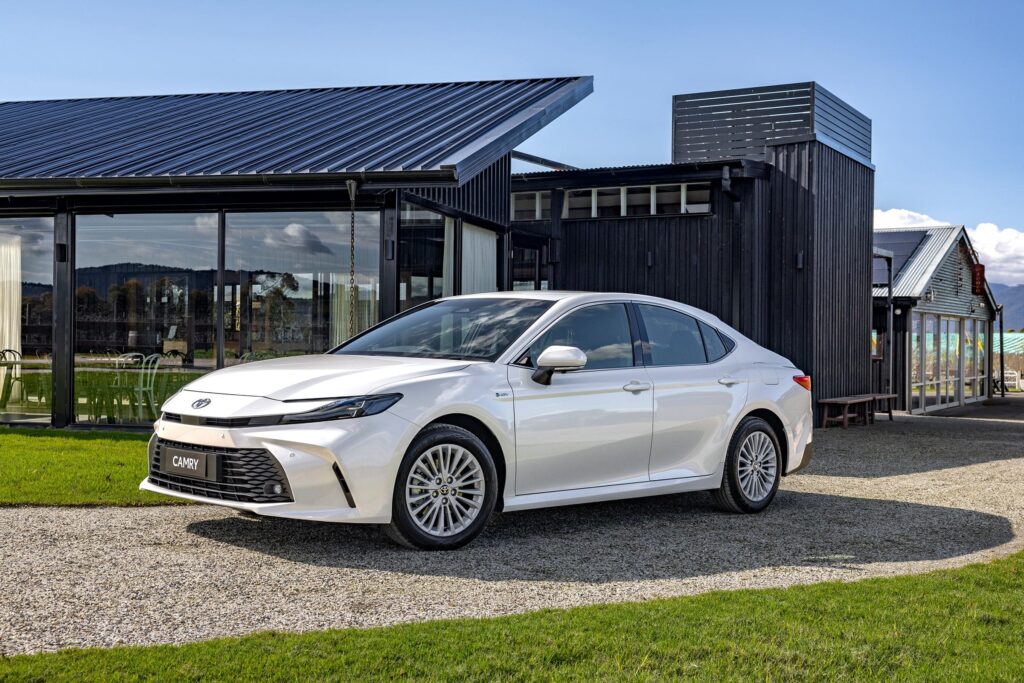
The Toyota Camry Hybrid is a strong vehicle to consider if long-distance comfort and fuel efficiency are both priorities.
Its sedan layout provides a different driving experience from the SUVs that dominate many new-car shopping lists, with a lower seating position and a focus on road use.
For drivers travelling large annual distances, the hybrid powertrain can make fuel consumption an important part of the Camry's appeal.
The Camry can be particularly relevant to commuters, business drivers and buyers who regularly travel between cities but do not require SUV ground clearance or seven-seat capacity.
When comparing one with a conventional petrol vehicle, look at the purchase-price difference alongside your expected annual fuel saving.
A more economical vehicle is not automatically cheaper overall if you borrow substantially more to buy it.
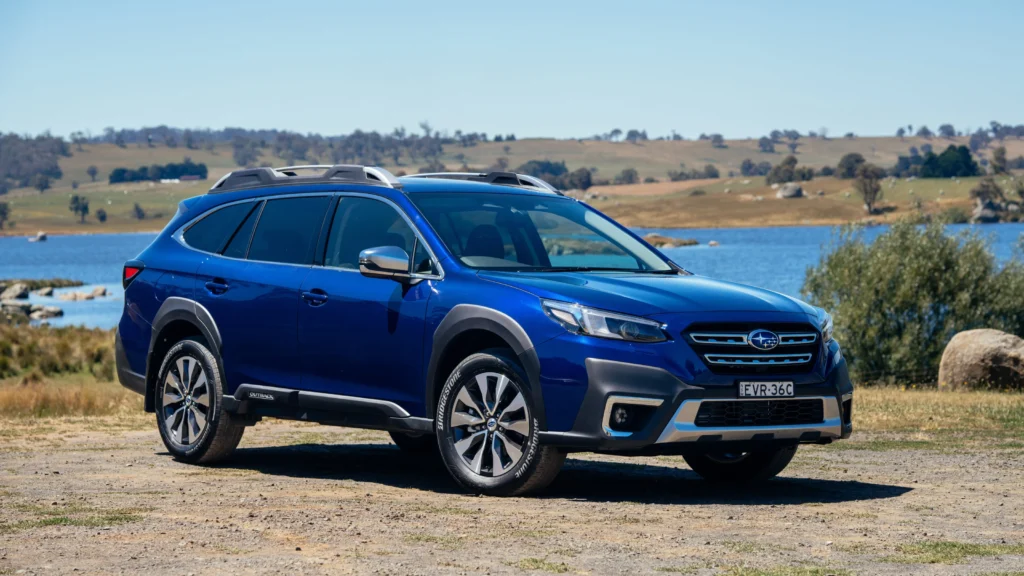
2. Subaru Outback
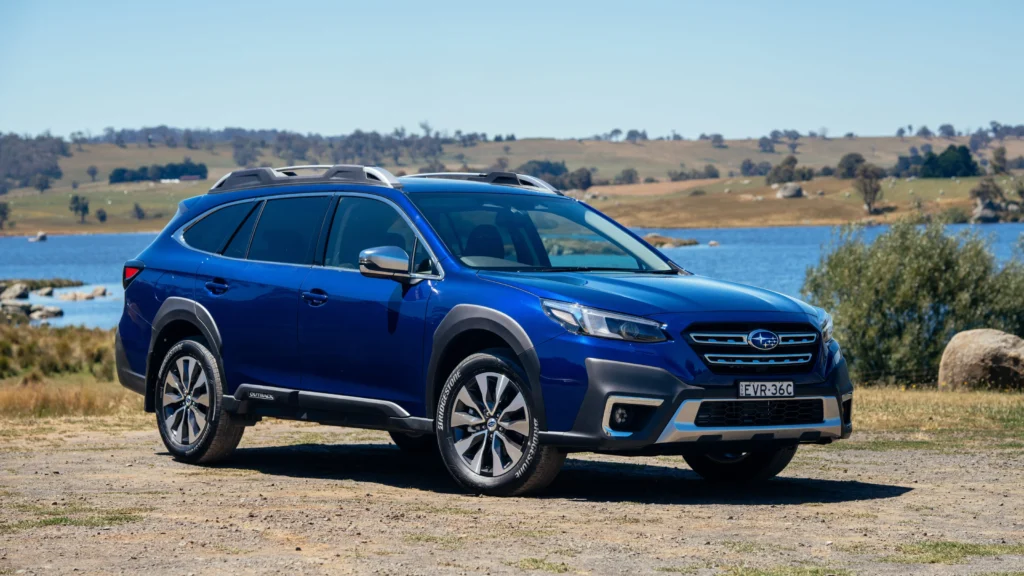
The Subaru Outback can make a lot of sense for New Zealand drivers whose long-distance journeys involve more than smooth motorways.
Its wagon-style body provides substantial passenger and luggage practicality, while all-wheel drive can appeal to drivers regularly travelling through changing weather or onto unsealed roads.
For road trips, the Outback provides an alternative to buying a conventional SUV while retaining a practical cargo area.
It may particularly suit families, outdoor-oriented buyers and drivers whose long trips frequently finish somewhere beyond the city.
The trade-off is that buyers focused purely on minimising fuel costs may find smaller hybrids more economical.
If rural roads form a major part of your driving, compare the Outback against the SUVs and 4WD-oriented vehicles that fit your actual conditions.
3. Toyota RAV4 Hybrid
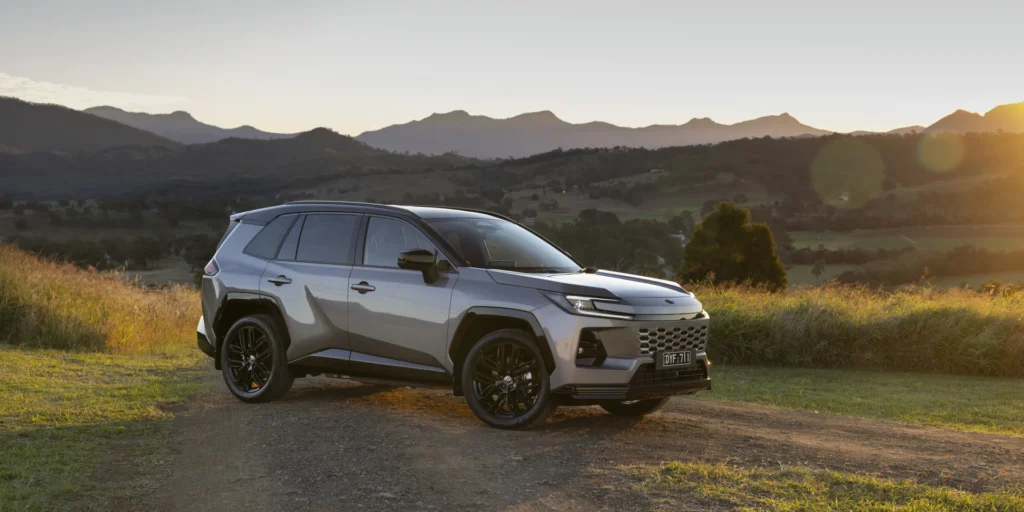
The Toyota RAV4 Hybrid combines the popularity and practicality of a medium SUV with a hybrid powertrain.
For long-distance family driving, that combination can be attractive because passengers and luggage can be accommodated without moving into a much larger vehicle.
The higher seating position may also appeal to buyers who simply prefer the driving position of an SUV.
If you drive a mixture of urban kilometres and longer highway journeys, the RAV4 Hybrid can provide a useful all-round package rather than being optimised for only one type of trip.
As with any hybrid, compare the actual purchase price with suitable petrol alternatives rather than assuming fuel savings automatically make it the cheaper vehicle.
For model-specific finance information, see our Toyota RAV4 finance NZ guide.
4. Skoda Superb
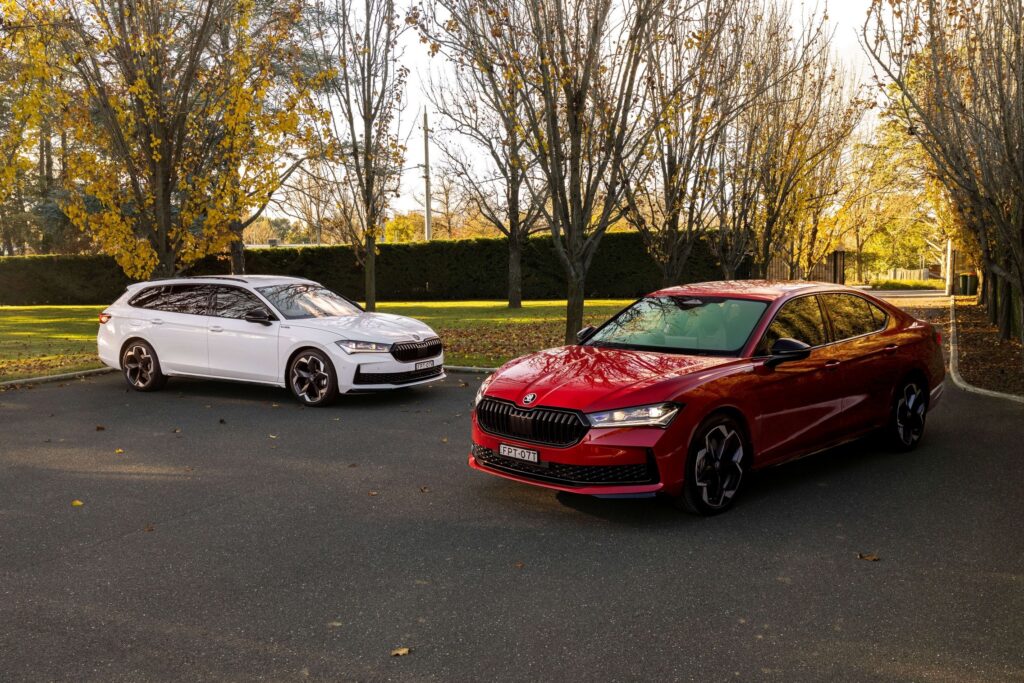
The Skoda Superb is worth researching for drivers who want a spacious road-focused vehicle rather than automatically choosing an SUV.
Its strengths for long-distance use include generous passenger accommodation and substantial luggage practicality depending on the body style and variant.
A lower road-focused vehicle can also provide a different ride and driving experience from a taller SUV.
For buyers travelling regularly with adults in the rear seats or significant luggage, usable cabin space can be more valuable than off-road styling or ground clearance.
Used examples can also provide a different price point from buying a new large SUV.
When buying used, compare service history, kilometres, condition and likely maintenance requirements alongside the purchase price.
5. Mazda 6
The Mazda 6 is another sedan and wagon option worth considering in the used long-distance-car market.
For drivers who do not need an SUV, a well-specified Mazda 6 can provide passenger comfort, luggage space and a road-focused driving experience.
Used vehicles cover a range of ages and purchase prices, allowing buyers to compare a relatively affordable long-distance car with newer and more expensive alternatives.
When buying a vehicle specifically because you intend to cover large annual kilometres, condition and maintenance history become especially important.
A lower purchase price can reduce the amount financed, but leave room in your budget for servicing, tyres and maintenance as the kilometres accumulate.
Our used car finance NZ guide covers used-vehicle borrowing considerations in more detail.
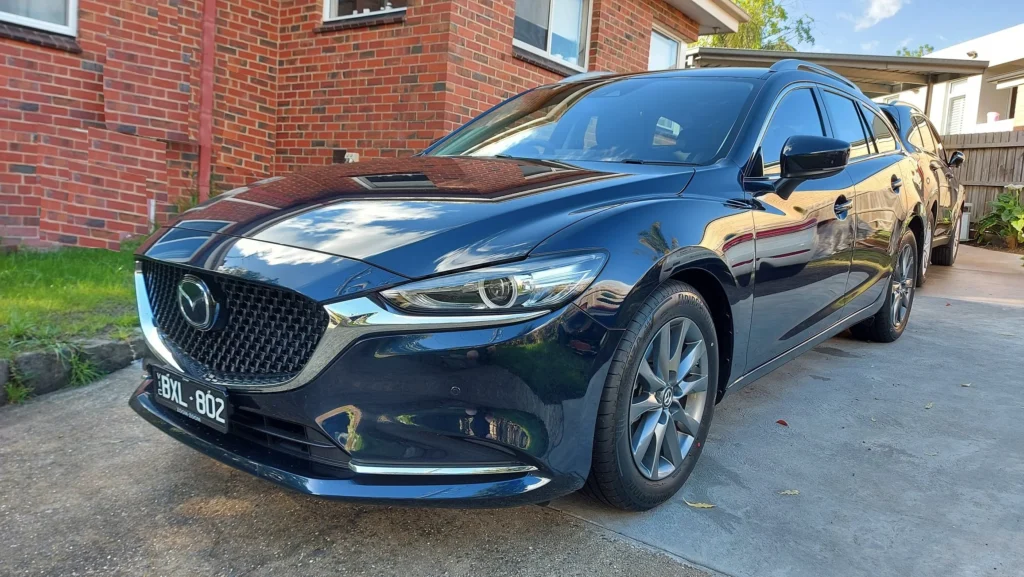
6. Hyundai Tucson Hybrid
The Hyundai Tucson Hybrid is another medium SUV option for buyers combining family practicality with substantial annual driving.
Its appeal is less about being a dedicated motorway car and more about providing one vehicle capable of commuting, family use, shopping and longer road trips.
For families, rear-seat space and usable luggage capacity can matter as much as outright fuel consumption.
If you are moving from a conventional petrol SUV into a hybrid, estimate how many kilometres you actually drive before deciding how much extra you are prepared to spend for improved fuel efficiency.
A higher purchase price creates a larger finance requirement unless it is offset by a larger deposit or trade-in.
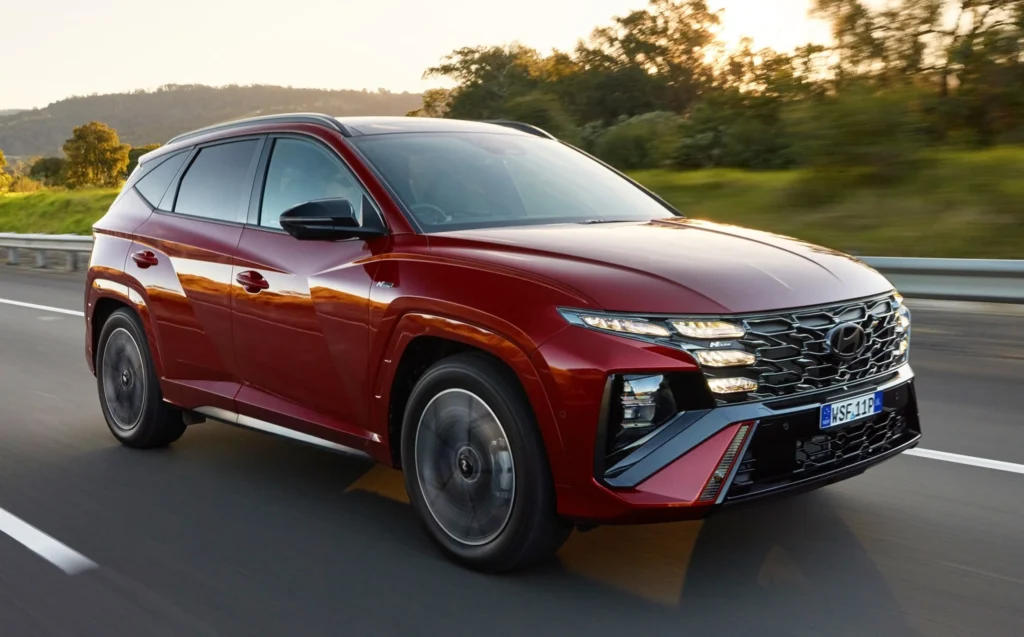
7. Kia Sportage Hybrid
The Kia Sportage Hybrid provides another family SUV alternative for drivers who cover a mixture of city and long-distance kilometres.
A medium SUV can be particularly practical for road trips because it provides passenger and luggage space without moving into the size and operating costs of a large seven-seat SUV.
Comfort should be assessed personally. Seat shape, driving position and ride preferences vary considerably between drivers.
If long journeys are the main reason for changing vehicles, try to arrange a meaningful test drive rather than deciding after a short trip around a dealership.
Compare the Sportage with both hybrid SUVs and conventional petrol alternatives at similar purchase prices.
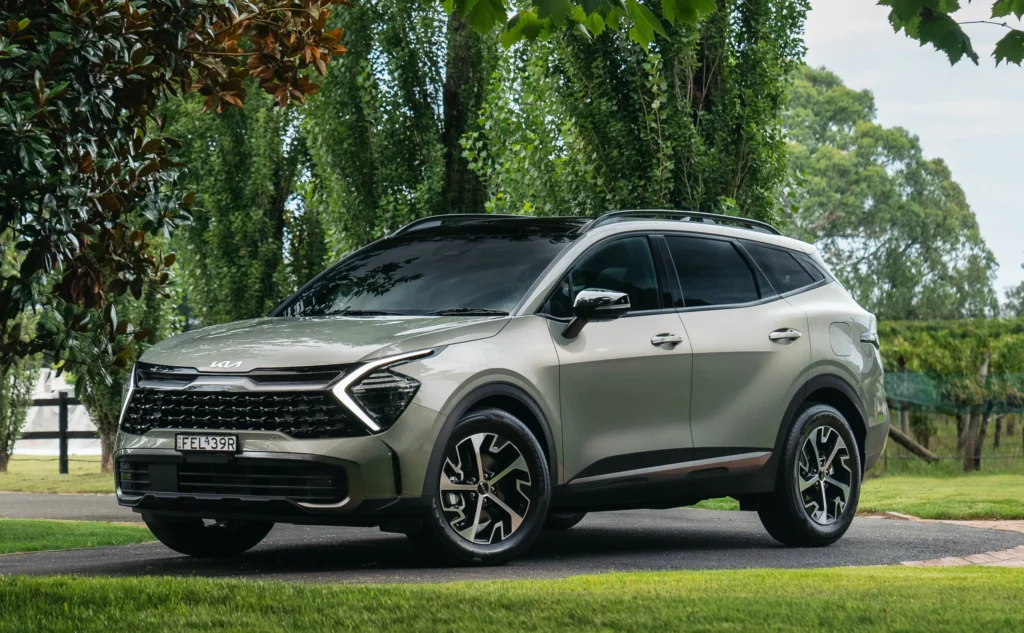
8. Toyota Corolla Touring
The Toyota Corolla Touring can be an interesting option for buyers wanting wagon practicality without moving into a larger SUV.
Its smaller footprint can make it easier to use around town while still providing a more practical cargo area for road trips.
For high-kilometre drivers, the key attraction of an efficient Corolla-based vehicle is the potential to keep everyday running costs under control.
It may particularly suit one or two-person households, commuters and buyers who need luggage flexibility but do not require the space of a RAV4 or Outback.
As with any imported or used vehicle, check the exact specification and equipment of the individual car because variants can differ.
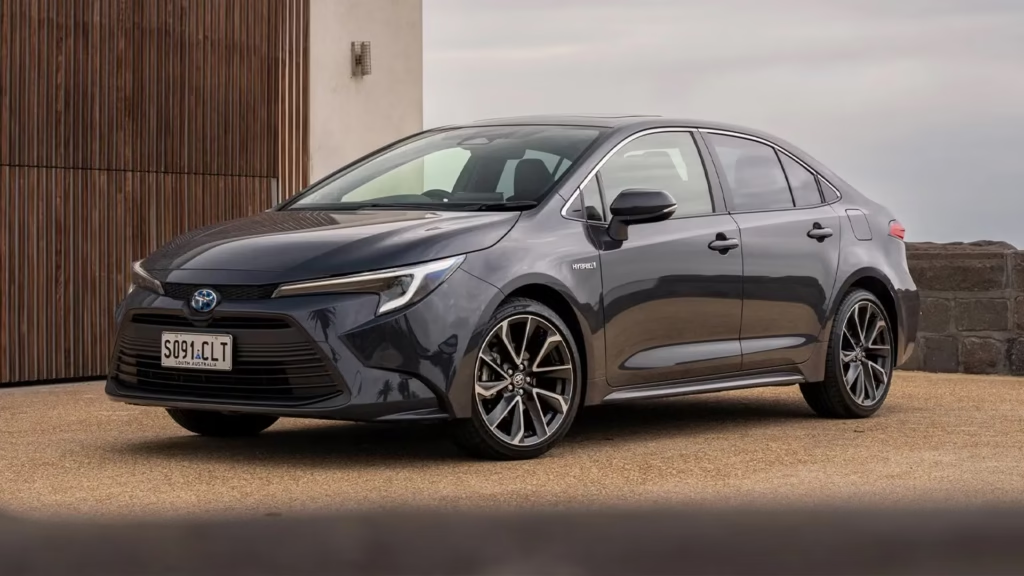
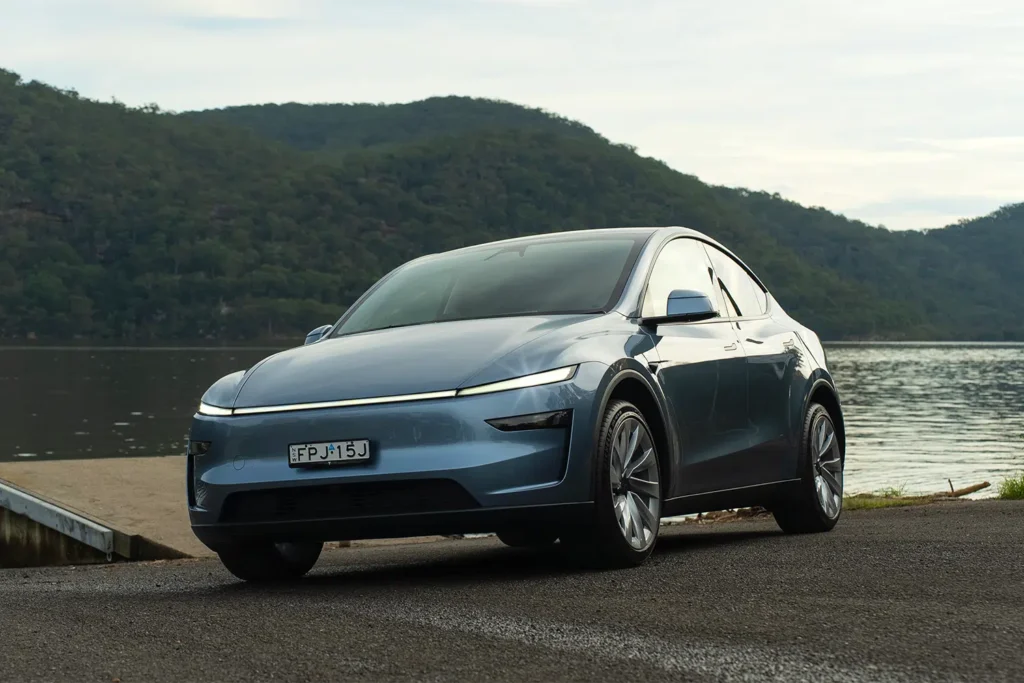
9. Tesla Model Y
The Tesla Model Y introduces a completely different long-distance ownership equation because energy comes from electricity rather than petrol.
For drivers able to charge conveniently at home, an EV can potentially make everyday energy costs attractive, particularly when annual kilometres are high.
Long-distance travel requires more planning because charging availability, charging speed, route, weather and driving conditions can affect the journey.
For some drivers this is easy to incorporate into normal rest stops. Others may prefer the refuelling flexibility of petrol or hybrid vehicles.
The purchase price should also be included in the comparison. Lower energy costs do not automatically make a more expensive EV cheaper overall.
For more information on financing an electric vehicle, see our EV finance NZ guide.
Popular long-distance cars to compare
| Vehicle | Type | Why consider it? |
|---|---|---|
| Toyota Camry Hybrid | Hybrid sedan | Comfort and efficiency for road-focused high-kilometre driving. |
| Subaru Outback | AWD wagon | Passenger and luggage practicality with all-wheel-drive versatility. |
| Toyota RAV4 Hybrid | Hybrid SUV | Family practicality with a hybrid powertrain. |
| Skoda Superb | Sedan/wagon | Large passenger and luggage space for road-focused travel. |
| Mazda 6 | Sedan/wagon | Used long-distance option at a range of purchase prices. |
| Hyundai Tucson Hybrid | Hybrid SUV | Family-oriented option for mixed urban and highway use. |
| Kia Sportage Hybrid | Hybrid SUV | Medium-SUV practicality for everyday and road-trip use. |
| Toyota Corolla Touring | Wagon | Smaller and potentially economical long-distance option. |
| Tesla Model Y | Electric SUV | EV option for drivers able to incorporate charging into long journeys. |
Best car for Auckland to Wellington driving
A journey such as Auckland to Wellington highlights what matters in a genuine long-distance vehicle.
Comfort becomes important because you can spend much of the day in the car, while fuel or energy consumption has a noticeable effect on the cost of the trip.
For a petrol or hybrid vehicle, range and refuelling are generally straightforward considerations. In an EV, charging locations and stops become part of route planning.
Driver-assistance features can also be useful during extended highway driving, although they do not replace driver attention or the need to take appropriate breaks.
For frequent intercity travel, prioritise a car that leaves you feeling comfortable after several hours rather than one that simply looks impressive in the showroom.
Best long-distance car for families
Families need to think beyond front-seat comfort.
Rear-seat space, luggage capacity, child-seat requirements, visibility and ease of loading can all influence how practical a car feels during a long road trip.
Medium SUVs such as the RAV4, Tucson and Sportage can provide a useful balance without moving into a much larger vehicle.
The Subaru Outback can provide an alternative for families who like wagon practicality, while larger households may need to consider seven-seat vehicles.
If you regularly need more than five seats, see our 7-seater finance NZ guide before deciding.
Best car for high annual kilometres
If you drive 20,000, 30,000 or more kilometres per year, relatively small differences in operating costs can become significant.
Fuel or electricity is only part of the calculation.
Tyres, servicing frequency, depreciation, insurance and eventual resale value also contribute to the cost of covering large distances.
A highly economical vehicle purchased for substantially more money may still cost more overall than a cheaper vehicle with slightly higher fuel use.
Estimate your expected annual kilometres and compare several complete ownership scenarios rather than concentrating on a single expense.
Hybrid vs petrol for long-distance driving
Whether a hybrid or conventional petrol vehicle makes more sense depends heavily on how and where you drive.
Hybrid systems can provide strong efficiency benefits in driving conditions involving frequent slowing and acceleration, while highway consumption can narrow the difference for some vehicles.
That does not mean hybrids are unsuitable for long journeys. Vehicles such as the Camry Hybrid and RAV4 Hybrid can still make practical long-distance choices.
Instead, compare the actual fuel consumption of the vehicles you are considering with their purchase prices.
If a hybrid costs more, calculate approximately how long your expected fuel savings would take to recover that difference.
For more information, see our hybrid car finance NZ guide.
EV vs hybrid for NZ road trips
Choosing between an EV and hybrid for road trips involves more than comparing energy consumption.
An EV can be convenient if you have home charging and your regular routes have suitable public charging options.
A hybrid provides the familiarity and speed of conventional refuelling while still potentially reducing fuel use compared with some petrol alternatives.
For drivers frequently travelling to remote locations, charging availability may have greater importance than it does for someone repeatedly travelling the same major intercity route.
Consider where you actually travel rather than whether an EV can theoretically complete a particular journey.
Our EV finance NZ guide and hybrid car finance NZ guide cover both options in more detail.
How much could fuel efficiency save a high-kilometre driver?
Fuel economy becomes increasingly important as annual kilometres increase.
Consider two hypothetical petrol vehicles, one using 6 litres per 100km and another using 9 litres per 100km.
Over 25,000 kilometres, the first would use approximately 1,500 litres while the second would use approximately 2,250 litres under those assumptions.
That is a difference of around 750 litres each year.
Multiply the difference by the fuel price you actually expect to pay to estimate the potential annual saving.
Then compare that saving with any additional amount you would need to borrow to purchase the more economical vehicle.
Long-distance running costs to compare
Fuel or electricity
High annual kilometres magnify differences in energy consumption.
RUC
Include Road User Charges where applicable to the vehicle you are considering.
Servicing
High-kilometre drivers can reach scheduled servicing intervals much faster.
Tyres
Frequent long-distance driving means tyre replacement can become a predictable ownership expense.
Insurance
Include insurance costs when comparing the complete vehicle budget.
Depreciation
High kilometres can influence the vehicle's future resale value.
Why seat comfort matters more than you might think
Seat comfort is highly personal and difficult to judge from specifications.
A driver's height, leg length, seating position and preferences can all change whether a particular seat feels comfortable.
Adjustable lumbar support, steering-wheel adjustment and seat adjustment can help drivers find a more suitable position, depending on the vehicle.
If long-distance driving is one of your main reasons for changing cars, spend meaningful time in the driver's seat before buying.
Where possible, take a longer test drive that includes open-road driving rather than evaluating the car only at low urban speeds.
Does wheel size affect long-distance comfort?
Wheel and tyre combinations can affect ride comfort, tyre cost and road noise.
Larger wheels with lower-profile tyres may look appealing but can produce a firmer ride depending on the vehicle and suspension setup.
Smaller wheels with more tyre sidewall can sometimes provide a more compliant ride on uneven surfaces.
The difference varies considerably by vehicle, so avoid assuming one wheel size will always be more comfortable.
For high-kilometre ownership, also compare replacement tyre prices before choosing a high-specification variant with particularly large wheels.
Do you need an SUV for long-distance driving?
No. An SUV is not automatically better for long-distance driving.
SUVs can provide a higher seating position, useful luggage space and family practicality, but sedans and wagons can be excellent long-distance vehicles.
A Camry, Superb or Mazda 6 may provide everything a road-focused driver requires without paying for SUV capability that is not needed.
Likewise, an Outback can provide wagon practicality without following the conventional SUV formula.
Choose the body style according to passenger, luggage and road requirements rather than assuming taller is automatically better.
Should you buy new or used for high-kilometre driving?
A new vehicle can provide low starting kilometres and current features but usually requires a higher purchase price than an older equivalent.
A used vehicle can significantly reduce the amount financed, but condition becomes increasingly important when you intend to add kilometres quickly.
A vehicle already showing high kilometres can still be suitable depending on its condition and maintenance history, but the future servicing and repair budget deserves consideration.
Review service history and consider an appropriate pre-purchase inspection.
Finance approval should not be treated as confirmation of mechanical condition.
See our used car finance NZ guide for more information.
Example long-distance car repayments at 8.45% p.a. over 5 years
| Amount financed | Approx. monthly repayment |
|---|---|
| $15,000 | $307 |
| $20,000 | $410 |
| $30,000 | $615 |
| $40,000 | $820 |
| $50,000 | $1,025 |
| $60,000 | $1,230 |
| $70,000 | $1,434 |
Why purchase price still matters when chasing fuel savings
High-kilometre drivers have a genuine reason to care about efficiency, but it is possible to spend too much money trying to save fuel.
Imagine one suitable used car requires $25,000 of finance while a newer hybrid requires $40,000.
The hybrid may use less fuel, but you are also financing an additional $15,000.
Compare the monthly repayment difference with the realistic monthly fuel saving based on your own annual kilometres.
The more expensive vehicle may still be worthwhile because of comfort, features, age or other benefits, but the decision should be based on the complete cost rather than fuel economy alone.
Our car loan repayments NZ guide explains how loan amount and term affect repayments.
Compare repayments before choosing your long-distance car
Compare repayments before choosing your long-distance car
Compare different vehicle prices using the same indicative rate and term to see what upgrading to a newer hybrid, SUV or EV could add to your monthly repayment.
Compare Vehicle Repayments →What loan term makes sense for a high-kilometre car?
Loan term deserves extra consideration when you expect to accumulate kilometres quickly.
A longer term generally reduces the regular repayment but means the finance remains in place for longer.
Think about how many kilometres the vehicle may have travelled by the time the loan finishes.
If you expect to replace the car relatively frequently because of high annual use, an unnecessarily long finance term may not suit your ownership plans.
A shorter term generally increases the regular repayment but repays the balance faster.
Our car loan terms NZ guide explains the trade-off.
Should you put a deposit on a long-distance car?
A deposit reduces the amount that needs to be financed.
That generally reduces the resulting repayment when the other loan assumptions remain the same.
For high-kilometre drivers, however, it can also be sensible to retain an appropriate maintenance reserve because tyres and scheduled servicing may arrive relatively frequently.
Consider the deposit as part of your overall vehicle budget rather than using every available dollar simply to reduce the loan.
See our car loan deposit NZ guide for more information.
Can you finance a long-distance car with no deposit?
Potentially, subject to the applicant, vehicle and lender criteria.
No-deposit finance generally means more of the purchase price needs to be borrowed.
That creates a larger starting loan balance than purchasing the same vehicle with a deposit.
Compare the resulting repayment with your complete transport budget, including fuel or electricity, insurance, servicing and tyres.
Our no deposit car finance NZ guide explains no-deposit vehicle finance in more detail.
What interest rate could you get?
There is no special interest rate simply because a vehicle will be used for long-distance driving.
AutoLoan uses 8.45% p.a. as an indicative default calculator rate to help buyers compare different vehicle prices.
This is not a guaranteed Simplify or lender rate.
Your actual interest rate is determined by the relevant lender following assessment and may be lower or higher.
Applicant circumstances, credit information, income, expenses, existing commitments, vehicle and requested borrowing can all be relevant to an assessment.
See our car loan interest rates NZ guide for more information.
Should you get pre-approved before choosing the car?
An initial or conditional finance assessment can help you understand the vehicle price range you may be able to consider before shopping.
This can be useful when your shortlist contains vehicles at very different price points, such as an older Mazda 6, a newer hybrid SUV and an EV.
Knowing your indicative budget can make it easier to compare vehicles on their actual suitability rather than continually increasing the amount you plan to spend.
Final approval can still depend on the vehicle and lender assessment.
Our car finance pre-approval NZ guide explains the process in more detail.
How to choose a long-distance car
Estimate your annual kilometres
Work out how far you genuinely drive in a normal year.
Identify your regular journeys
Consider whether your kilometres are motorway, rural highway, gravel, urban or a mixture.
Choose the right body style
Compare sedans, wagons and SUVs according to passengers and luggage rather than trends.
Compare energy costs
Estimate fuel or electricity costs using your own annual kilometres.
Take a proper test drive
Pay particular attention to seat comfort, driving position, ride and cabin noise.
Compare complete ownership costs
Include finance, fuel or electricity, RUC where applicable, insurance, servicing and tyres.
Inspect used vehicles
Review maintenance history and consider an appropriate pre-purchase inspection.
Explore your finance options
Compare the borrowing required for each suitable vehicle rather than choosing on purchase price alone.
Found the right car for the kilometres you drive?
Found the right car for the kilometres you drive?
AutoLoan partners with Simplify Finance to help Kiwis explore vehicle-finance options from its panel of 10+ lenders, subject to lender criteria and approval.
Get My Car Loan Match →Best cars for long-distance driving NZ: key things to remember
The best long-distance car should be comfortable, suitable for your passengers and luggage and economical enough for the kilometres you actually drive.
Toyota Camry Hybrid, Subaru Outback, Toyota RAV4 Hybrid, Skoda Superb, Mazda 6, Hyundai Tucson Hybrid, Kia Sportage Hybrid, Toyota Corolla Touring and Tesla Model Y all represent different approaches worth comparing.
Do not assume you need an SUV. Sedans and wagons can make excellent long-distance vehicles.
High annual kilometres make fuel or energy consumption more important, but purchase price, depreciation, servicing and tyres also matter.
Compare the additional finance required for a more economical vehicle with the realistic running-cost savings it could provide.
If buying used, condition and service history become particularly important when you intend to add kilometres quickly.
AutoLoan's 8.45% p.a. calculator rate is indicative only and is not a guaranteed lender rate.
AutoLoan is not a lender. Vehicle-finance applications are handled by Simplify Finance and the relevant lender determines approval, rate, loan amount and terms.
For related reading, see our Toyota RAV4 finance NZ guide, hybrid car finance NZ guide, EV finance NZ guide, family SUV finance NZ guide, 7-seater finance NZ guide, used car finance NZ guide, car loan repayments NZ guide and car loan interest rates NZ guide.
Frequently Asked Questions
What is the best car for long-distance driving in NZ?
There is no single best vehicle. Toyota Camry Hybrid, Subaru Outback, Toyota RAV4 Hybrid, Skoda Superb, Mazda 6 and several hybrid SUVs are worth comparing depending on comfort, space, efficiency and budget requirements.
What is the most comfortable car for long drives?
Comfort is subjective and depends on seat shape, driving position, suspension, tyres and the driver. A meaningful open-road test drive is one of the best ways to compare vehicles.
What is a good car for driving Auckland to Wellington?
A comfortable and efficient sedan, wagon or SUV can all work well. Consider seat comfort, cabin refinement, fuel or energy consumption, luggage capacity and range.
Is a Toyota Camry Hybrid good for long-distance driving?
The Camry Hybrid is worth considering for road-focused drivers wanting sedan comfort and hybrid fuel efficiency.
Is a Subaru Outback good for long trips?
The Outback can be useful for long trips because it combines passenger and luggage space with all-wheel-drive versatility.
Is a Toyota RAV4 Hybrid good for road trips?
The RAV4 Hybrid can suit families wanting SUV practicality and a hybrid powertrain for mixed everyday and longer-distance driving.
Is an SUV better for long-distance driving?
Not necessarily. Sedans and wagons can make excellent long-distance vehicles. Choose according to passenger, luggage, road and comfort requirements.
Is a hybrid good for long-distance driving?
A hybrid can be a practical long-distance vehicle, although the efficiency advantage over a petrol alternative depends on the exact vehicles and driving conditions.
Is an EV good for long road trips in NZ?
An EV can suit long trips where charging fits conveniently into the route. Consider real-world range, charging locations, charging time and the destinations you regularly visit.
Is petrol or hybrid better for motorway driving?
It depends on the vehicles being compared. Hybrid efficiency advantages can differ between urban and steady highway driving, so compare realistic consumption and purchase prices.
What should I look for in a long-distance car?
Consider seat comfort, driving position, ride quality, cabin noise, fuel or energy use, luggage space, safety equipment, tyres and servicing costs.
Does adaptive cruise control help on long trips?
Adaptive cruise control can be useful on suitable roads when used correctly, but it does not replace driver attention, safe driving or appropriate rest breaks.
Are smaller wheels better for long-distance driving?
Wheel and tyre choice can affect ride comfort, noise and tyre costs, but the result depends on the individual vehicle and suspension setup.
What is the best car for someone driving 30,000km a year?
High-kilometre drivers should place particular emphasis on comfort, fuel or energy use, servicing, tyres, reliability and depreciation. The best model depends on budget and driving conditions.
Does fuel economy matter more if I drive long distances?
Yes. The more kilometres you drive, the larger the annual dollar difference between vehicles with different fuel consumption can become.
Should I buy a more expensive hybrid to save fuel?
Not automatically. Compare the additional purchase and finance cost with the realistic fuel saving based on your expected annual kilometres.
Should I buy new or used for long-distance driving?
Either can work. A new vehicle starts with fewer kilometres but usually costs more, while a used vehicle can reduce the amount financed but makes condition and maintenance history particularly important.
Can I finance a used long-distance car?
Potentially. Used-vehicle finance remains subject to the applicant, vehicle and lender criteria.
Can I finance a hybrid car?
Potentially. Hybrid vehicles may be eligible for vehicle finance subject to lender criteria and assessment.
Can I finance an electric car?
Potentially. EV finance depends on the applicant, vehicle and relevant lender criteria.
Can I get a long-distance car with no deposit?
Potentially, subject to lender criteria and approval. Financing more of the purchase price generally results in a larger starting loan balance.
How much would a $30,000 car loan cost?
At an illustrative 8.45% p.a. over five years, $30,000 is approximately $615 per month before applicable fees.
How much would a $40,000 car loan cost?
At an illustrative 8.45% p.a. over five years, $40,000 is approximately $820 per month before applicable fees.
How much would a $50,000 car loan cost?
At an illustrative 8.45% p.a. over five years, $50,000 is approximately $1,025 per month before applicable fees.
What interest rate could I get?
The actual rate is determined by the relevant lender following assessment. AutoLoan uses 8.45% p.a. as an indicative calculator rate only and it is not a guaranteed rate.
Should I put a deposit on a high-kilometre car?
A deposit can reduce the amount financed, but high-kilometre drivers may also want to retain appropriate funds for servicing, tyres and unexpected maintenance.
What loan term should I choose?
Consider the repayment, total borrowing cost and how many kilometres the vehicle may have travelled by the time the loan ends.
Should I get car finance pre-approved before shopping?
An initial or conditional assessment can help establish an indicative budget, although final approval may still depend on the vehicle and lender assessment.
Can Simplify compare finance for my next car?
AutoLoan partners with Simplify Finance, which handles vehicle-finance applications and can assess available options from its panel of 10+ lenders, subject to lender criteria and approval.
Does AutoLoan provide car loans?
No. AutoLoan.nz is not a lender. Applications through AutoLoan are handled by Simplify Finance and the relevant lender determines approval, rates, amounts and terms.
This article provides general information only and does not constitute financial, mechanical, legal or personalised vehicle advice, finance pre-approval, or an offer or guarantee of credit. Vehicle specifications, fuel consumption, range, equipment, dimensions and features vary between models, variants and model years and should be confirmed for the exact vehicle being considered. Real-world fuel and energy consumption and EV range vary according to driving conditions, weather, load, speed and other factors. Finance examples are illustrative only and use an indicative rate of 8.45% p.a. unless stated otherwise. They exclude applicable fees and other costs. Your actual interest rate, repayments, loan amount, fees, terms and eligibility are determined by the relevant lender following assessment and may differ. AutoLoan.nz is not a lender and does not make lending decisions. Finance applications through AutoLoan are handled by our finance partner Simplify Finance and remain subject to lender assessment, criteria and approval.