

Ute finance NZ: the quick answer
How does ute finance work in NZ?
Ute finance generally involves borrowing some or all of the money required to purchase a ute and repaying the amount over an agreed loan term.
The amount you need to borrow depends on the purchase price of the ute, your deposit, any trade-in equity and other applicable costs.
If your application is approved, the relevant lender determines the approved amount, interest rate, repayment, loan term and other finance conditions.
Because a used work ute and a new high-specification 4WD double cab can have very different purchase prices, there is no single ute repayment that applies to every buyer.
Our car loan approval guide explains some of the wider factors lenders may consider when assessing vehicle finance.
What affects the cost of financing a ute?
Ute price
A higher purchase price generally means a larger amount needs to be financed if your contribution remains unchanged.
Deposit
Putting money towards the purchase can reduce your starting loan balance.
Trade-in equity
Positive equity in your existing vehicle may contribute towards your next ute.
Interest rate
The rate you receive affects your regular repayment and overall borrowing cost.
Loan term
A longer or shorter term changes how the loan is spread across repayments.
Your circumstances
Income, expenses, debts, credit information and other factors can form part of lender assessment.
How much does a ute cost in New Zealand?
Utes cover an unusually broad range of prices because New Zealand buyers can choose between older used workhorses, late-model ex-fleet vehicles and new high-specification double-cab 4WD models.
Price can vary according to make, model, age, kilometres, drivetrain, cab configuration, engine, specification and condition.
Accessories such as canopies, tow bars, deck liners, roof racks and other equipment can also affect the total purchase price.
Instead of choosing a ute based only on its advertised price, work out how much you would actually need to finance after accounting for your available deposit or trade-in.
This gives you a more useful starting point for comparing repayments.
If you already have a model in mind, compare our Ford Ranger finance guide, Toyota Hilux finance guide, Mitsubishi Triton finance guide and Nissan Navara finance guide for model-specific borrowing and repayment considerations.
How much ute could fit your budget?
How much ute could fit your budget?
Start with your income, expenses and existing repayments to get an indicative idea of your borrowing power before deciding whether you're shopping for a $25,000 used ute or a $60,000+ late-model 4WD.
See My Ute Borrowing Power →What kind of ute actually suits your budget?
How much ute can you actually afford?
The ute you can afford is not necessarily the ute with the highest purchase price a lender may be willing to finance.
A more useful approach is to work backwards from your complete budget.
Start with your regular income and household expenses. Add existing loan, credit-card and other debt repayments. Then allow for the running costs the ute will add to your budget, including fuel, insurance, servicing, tyres and Road User Charges where applicable.
Once you know what regular vehicle cost feels manageable, compare several purchase prices rather than choosing the ute first and trying to make the finance fit afterwards.
Your deposit and trade-in also matter. A $50,000 ute with $15,000 of available contribution requires a very different amount of new borrowing from the same ute purchased without that contribution.
Use our how much can I borrow for a car loan guide alongside the borrowing power calculator if you want to understand the numbers in more detail.
See what your ute repayments could be
See what your ute repayments could be
Already have a price in mind? Enter the amount you expect to finance and compare indicative repayments using 8.45% p.a. as the default calculator rate.
Calculate My Ute Repayments →What are the repayments on a ute loan?
Ute repayments depend on the amount financed, your actual interest rate, loan term, repayment frequency and applicable finance costs.
A buyer financing $25,000 for a used ute will have a very different repayment from someone financing $60,000 for a newer 4WD double cab.
Contributing a deposit or positive trade-in equity can reduce the starting loan balance.
Changing the loan term can also significantly change the regular repayment and total interest paid.
AutoLoan's calculator uses 8.45% p.a. as its default indicative rate for these examples. Your actual rate is determined following assessment and may be higher.
Our car loan repayments guide explains vehicle loan repayments in more detail.
Example ute loan repayments at 8.45% p.a.
How a deposit or trade-in changes a $50,000 ute loan
A $50,000 ute doesn't necessarily mean a $50,000 loan
The advertised price of the ute and the amount you finance are two different numbers.
If you buy a $50,000 ute and contribute $10,000 through savings or positive trade-in equity, the starting amount required is approximately $40,000 before applicable fees or other financed costs.
That distinction becomes particularly important when comparing utes. A more expensive vehicle may still require a similar loan if you have a larger contribution, while a cheaper vehicle financed with little or no contribution could require more borrowing than expected.
Compare the amount financed rather than looking only at the windscreen price.
New vs used ute finance
Both new and used utes can potentially be financed, subject to the applicant, vehicle and lender criteria.
A new ute can provide the latest equipment, safety technology and manufacturer support, but may require a significantly larger amount of finance.
A used ute can reduce the purchase price and amount borrowed, but condition, kilometres, service history and previous use become increasingly important.
A lower purchase price does not automatically mean lower overall ownership costs if an older vehicle requires additional maintenance.
Our used car finance guide explains financing used vehicles in more detail.
New vs used ute: what changes financially?
2WD vs 4WD: should you borrow more for four-wheel drive?
Four-wheel drive is genuinely useful for some Kiwi ute owners, but not everyone needs it.
Farm access, muddy worksites, boat ramps and some towing or recreational situations can make 4WD capability valuable. Someone whose ute spends almost all its time commuting on sealed roads may place much less value on it.
Instead of automatically choosing 4WD, find the actual 2WD and 4WD variants you're considering and compare their purchase prices.
Then put the difference through the repayment calculator. That turns an abstract specification decision into a financial one: is the extra capability worth the additional regular repayment to you?
Remember that capability depends on the particular vehicle and conditions. Four-wheel drive does not override manufacturer limits or safe driving requirements.
If four-wheel-drive capability is a major part of your buying decision, our 4WD finance NZ guide goes deeper into 4WD vs AWD, used-vehicle checks, towing, diesel ownership costs and off-road considerations.
Double-cab vs single-cab ute finance
Cab configuration can substantially change both how a ute is used and how much it costs.
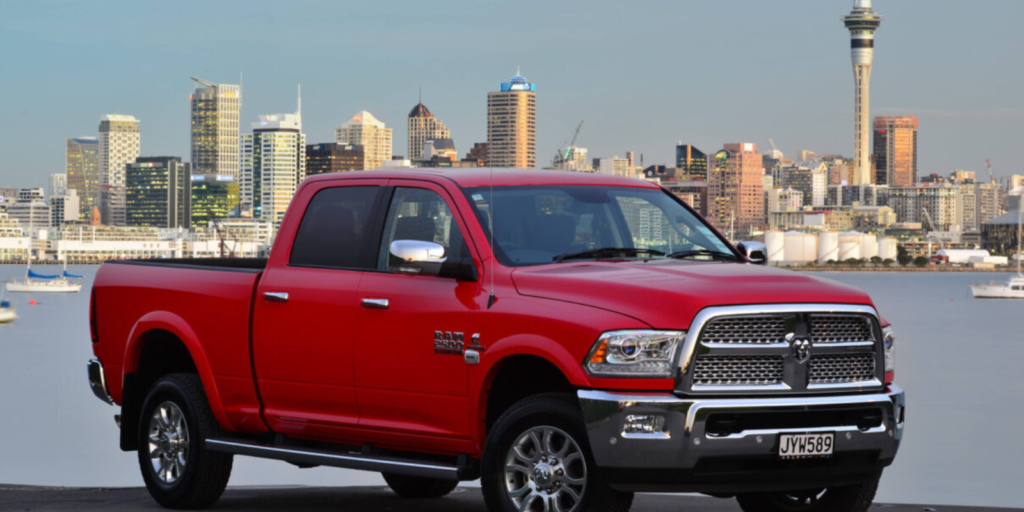
Double-cab utes provide a second row of seats and are popular with buyers who use one vehicle for both work and personal driving.
Single-cab and extra-cab configurations can prioritise load space and may better suit some commercial or agricultural uses.
The finance decision should therefore start with what you need the ute to do rather than automatically choosing the highest specification.
If a cheaper cab configuration meets your needs, it may also reduce the amount you need to borrow.
For buyers comparing popular double-cab options, see the dedicated Ford Ranger finance guide, Toyota Hilux finance guide, Mitsubishi Triton finance guide and Nissan Navara finance guide.
Work ute or lifestyle ute: don't finance features you don't need
The modern ute market stretches from relatively basic work vehicles to highly equipped lifestyle models with premium interiors, large wheels and extensive technology.
That creates a finance decision that doesn't exist to the same extent with many small cars.
If the ute is primarily a tool for earning income, identify the specifications that actually help it do the job: cab configuration, payload requirements, towing needs, drivetrain and the equipment you need to carry.
A higher trim level may still be worthwhile if you value the additional equipment, particularly where the ute also serves as your everyday family vehicle. But calculate how much more you're borrowing for that upgrade.
A difference of thousands of dollars in purchase price becomes a difference in both repayments and interest when financed.
Work ute finance NZ
A ute can be an essential working asset for builders, electricians, plumbers, landscapers, farmers and many other New Zealand businesses and trades.
When choosing a work ute, consider the vehicle's purchase price alongside payload, towing requirements, cab configuration, running costs and the equipment you need to carry.
A more expensive ute may make sense where additional capability is genuinely required for the work it performs.
On the other hand, borrowing substantially more for lifestyle features that are not necessary for the job increases the finance commitment.
Business and tax treatment can depend on individual circumstances and should be discussed with an appropriately qualified accountant or tax adviser.
If you are weighing a work-focused ute against a more general off-road vehicle, our 4WD finance guide explains how capability, towing, modifications and running costs can change the overall finance decision.
Ute finance for tradies
Tradies can have particularly specific requirements when choosing a ute.
The vehicle may need to carry tools, tow trailers, travel between worksites and still provide enough passenger space for everyday use.
Canopies, tow bars, racks, drawers and other accessories can also increase the total amount being spent on the vehicle setup.
Before applying for finance, separate the equipment you genuinely need from optional upgrades and calculate the repayment on the complete amount you expect to finance.
If you are self-employed, the information required to demonstrate income may differ from a standard wage or salary application.
Can self-employed buyers get ute finance?
Potentially. Self-employed applicants can apply for vehicle finance, although the information required to assess income can differ from that required for a wage or salary earner.
The lender may require enough information to understand the income reasonably available to support the proposed repayments.
Requirements vary according to the lender, business structure and applicant's circumstances.
The amount requested and your wider financial commitments remain relevant.
Our self-employed car loan guide explains self-employed vehicle finance in more detail.
Can you finance a ute for both work and personal use?
Many double-cab utes are used for a combination of work, commuting, towing and family transport.
The fact that you intend to use a ute for more than one purpose does not by itself determine whether finance will be available.
The relevant lender assesses the application and proposed transaction according to its criteria.
From a budgeting perspective, consider whether the ute genuinely meets both sets of needs before borrowing more for a higher-specification model.
If business use creates tax or accounting questions, obtain advice relevant to your circumstances.
If your priority is enclosed family space rather than a tray or wellside, compare this guide with our family SUV finance NZ guide before deciding which type of vehicle best fits your budget.
Diesel ute finance NZ
Diesel engines remain common across New Zealand's ute market, particularly in vehicles designed for towing and work use.
For finance purposes, the important figure is the purchase price and amount you need to borrow rather than the fuel type alone.
However, fuel type affects the wider ownership budget.
Diesel vehicle owners should account for fuel, servicing and applicable Road User Charges alongside the loan repayment.
A repayment that appears affordable in isolation may be less comfortable once the full operating cost of the ute is included.
Many buyers comparing diesel utes are also comparing specific models such as the Ford Ranger, Toyota Hilux, Mitsubishi Triton and Nissan Navara, where purchase price and specification can materially change the amount financed.
Don't forget Road User Charges when budgeting for a diesel ute
Road User Charges can be an important part of the operating budget for diesel utes in New Zealand.
They are separate from the vehicle loan repayment, so they should be included when estimating what the ute will actually cost you to run.
Someone travelling substantial distances for work may face a very different annual operating cost from someone who drives relatively few kilometres.
RUC rates and rules can change, so check current official New Zealand requirements when calculating your ownership budget.
The key point is to compare finance affordability using the complete vehicle budget rather than the loan repayment alone.
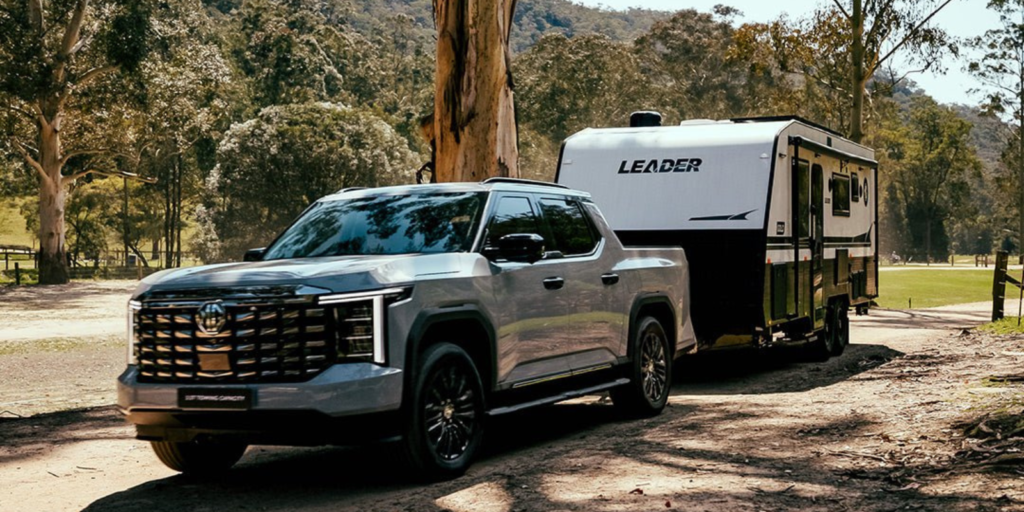
Financing a ute for towing
Towing is one of the main reasons buyers choose utes, but towing requirements should be established before selecting the vehicle.
Different models and variants can have different towing capacities and conditions, so check the manufacturer's specifications for the exact ute you are considering.
A buyer towing a large boat or caravan may require a different vehicle from someone who only occasionally tows a small trailer.
Choosing additional towing capability can increase the purchase price and therefore the amount financed.
Do not rely on a generic model claim when determining whether a particular ute is suitable for your trailer or load.
If towing is one of the main reasons you are buying a ute, also read our 4WD finance NZ guide and the model-specific Ford Ranger finance, Toyota Hilux finance, Mitsubishi Triton finance and Nissan Navara finance guides.
Can ute accessories be included in finance?
Ute buyers frequently consider accessories such as canopies, tow bars, roof racks, deck liners, hard lids, drawers and other equipment.
Whether particular accessories can form part of a financed transaction depends on the lender and how the purchase is structured.
If accessories are included in the amount borrowed, remember that you may be paying interest on those accessories over the loan term.
A $4,000 accessory package is therefore not necessarily just a $4,000 decision when it is financed.
Ask for the complete amount being financed and calculate the resulting repayment before agreeing to optional equipment.
Found the ute you want?
Found the ute you want?
AutoLoan partners with Simplify Finance, which can assess your application against options from its panel of 10+ lenders. Rates from 8.45% p.a. may be available, subject to lender criteria and approval.
Get My Ute Loan Match →Compare finance guides for popular utes
Ranger vs Hilux vs Triton vs Navara: compare the finance amount, not just the ute
Once you've narrowed your search to a few utes, compare the actual examples available to you rather than assuming one model will always be cheaper to finance.
Age, kilometres, variant, drivetrain, condition and specification can create a large price difference even within the same model.
Take the advertised price of each ute, subtract the deposit or positive trade-in equity you expect to contribute, and put the remaining amounts through the same repayment calculation.
This gives you an apples-to-apples comparison of the finance commitment.
You can then weigh that difference against the vehicle's condition, equipment and suitability for what you need it to do.
For model-specific detail, open the Ford Ranger finance guide, Toyota Hilux finance guide, Mitsubishi Triton finance guide or Nissan Navara finance guide.
Compare the utes on your shortlist
Compare the utes on your shortlist
Put each ute's actual finance amount through the calculator and see how a different purchase price, deposit or loan term changes the estimated repayment.
Compare Ute Repayments →Buying a used ute in NZ: finance approval isn't the vehicle inspection
A lender approving finance does not mean the ute has been mechanically inspected or that it is necessarily a good purchase.
This distinction is particularly important with used utes because previous owners may have used them for towing, farm work, worksites or off-road driving.
Look at the service history, kilometres, tyres, suspension, brakes, drivetrain and general condition. Consider an appropriate independent pre-purchase inspection.
You should also check whether money is owing on the vehicle. A registered security interest can create serious problems for a buyer, so check the Personal Property Securities Register before completing an appropriate used-vehicle purchase.
Private purchases deserve additional care because the protections applying to a private sale differ from purchasing from a motor vehicle trader.
For broader used-vehicle borrowing information, see our used car finance guide. If you are specifically considering a used Ranger, Hilux, Triton or Navara, the model finance guides above can help you compare the finance side of each purchase.
Used ute finance checklist
Can you finance a high-kilometre used ute?
Potentially, although vehicle requirements vary between lenders.
Higher kilometres do not automatically determine whether finance will be available, but the age, value and condition of the ute can be relevant to a lender's criteria.
From a buyer's perspective, higher kilometres can also increase the importance of service history and future maintenance budgeting.
A cheaper high-kilometre ute may reduce the amount borrowed while potentially exposing you to greater repair costs.
Consider both the loan and the condition of the vehicle before purchasing.
Can you finance a modified ute?
Potentially, but modifications can add another consideration to both the purchase and finance decision.
The lender may have requirements relating to the vehicle being financed, and modifications may also affect insurance, value and road-use requirements.
Do not assume the amount previously spent modifying a ute is equivalent to the amount those modifications add to its market value.
If buying a modified ute, understand exactly what has been changed and whether the modifications have been completed and certified appropriately where required.
Check insurance implications before completing the purchase.
If the ute has been modified for off-road use, our 4WD finance NZ guide also covers modification, tyre, suspension and off-road ownership considerations.
How much deposit do you need for a ute?
There is no universal deposit amount required for every ute finance application.
Deposit requirements depend on the lender, applicant, vehicle and transaction.
Contributing a deposit reduces the amount you need to finance.
For example, contributing $10,000 towards a $50,000 ute reduces the starting finance requirement to approximately $40,000 before other applicable costs.
Our car loan deposit guide explains vehicle deposits in more detail.
How a deposit changes your ute finance amount
Can you get ute finance with no deposit?
Potentially, depending on the lender, applicant, vehicle and transaction.
Not every finance product has the same deposit requirements.
Financing the full eligible purchase amount means starting with a larger loan balance than if you contribute money upfront.
That can increase your regular repayment and total borrowing cost depending on the rate and term.
Our no deposit car finance guide explains no-deposit vehicle finance in more detail.
Can you trade your current vehicle towards a ute?
Potentially. A trade-in can contribute towards your next ute and reduce the amount of additional finance required.
If your current vehicle is owned outright, its agreed trade-in value may form part of your contribution.
If finance is still owing, the relevant figure is the equity remaining after the existing finance is settled.
Positive equity may contribute towards the ute, while negative equity creates a shortfall that needs to be dealt with.
Understand the complete transaction before deciding how much new finance you require.
Once you know the amount of positive equity or shortfall in your current vehicle, compare the remaining borrowing requirement using our car loan repayments guide and car loan deposit guide.
Compare different ute finance scenarios
Compare different ute finance scenarios
Try different ute prices, deposits and trade-in amounts to see how changing the amount you borrow could affect your estimated repayments.
Compare Ute Repayments →What loan term should you choose for a ute?
The appropriate loan term depends on your budget and the finance available.
A shorter term generally produces higher regular repayments but can reduce total interest when other factors remain the same.
A longer term generally lowers the regular repayment while potentially increasing the total amount of interest paid.
For older used utes, it can also be useful to consider the age and kilometres of the vehicle relative to how long you expect to continue making repayments.
Our car loan terms guide explains vehicle-finance terms in more detail.
What interest rate could you get on ute finance?
AutoLoan uses 8.45% p.a. as the default indicative rate in its ute repayment calculator.
Rates from 8.45% p.a. may be available through our finance partner Simplify, subject to the lender, applicant, vehicle, application assessment and approval.
Your actual rate may be higher and there is no single interest rate that applies to every ute buyer.
Credit information, income, expenses, existing debts, requested loan amount and other factors can potentially affect available finance.
Our car loan interest rates guide explains vehicle-finance interest rates in more detail.
Can you get ute finance with bad credit?
Potentially, although adverse credit can affect lender options, eligibility and finance pricing.
A lender can consider credit information alongside current income, expenses, debts and the amount requested.
Choosing a cheaper used ute or contributing a larger deposit can reduce the amount you need to borrow but does not guarantee approval.
Your actual options depend on your individual circumstances and applicable lender criteria.
Our bad credit car finance guide explains vehicle finance with an imperfect credit history.
Can you finance a ute with part-time or casual income?
Potentially. Part-time or casual employment does not automatically prevent someone from applying for ute finance.
Where income varies, the lender may require enough information to understand what level of income is reasonably sustainable.
The proposed ute repayment still needs to be considered alongside living expenses and existing financial commitments.
Choosing a cheaper ute can reduce the amount requested but does not guarantee approval.
Our part-time and casual income car finance guide explains variable-income vehicle finance in more detail.
Can you finance a ute from a private seller?
Potentially, depending on the lender, applicant, vehicle and transaction.
Private-sale finance can require additional information about the seller and ute before settlement.
Appropriate vehicle-history, ownership and security checks should also be made before completing the purchase.
A pre-purchase inspection can be particularly valuable when purchasing an older or heavily used ute privately.
Our private sale car finance guide explains private-sale vehicle finance.
Dealer ute finance vs arranging finance separately
A ute purchased through a dealership may be offered with finance arranged as part of the transaction.
You can also explore vehicle finance separately from the dealer.
Whichever route you consider, compare the actual interest rate, applicable fees, regular repayment, loan term and total amount payable.
A convenient finance arrangement is not automatically the lowest-cost option.
Our broker vs dealer finance guide explains common ways of arranging vehicle finance.
What to compare when looking at a ute loan
Amount financed
Work out the actual amount required after your deposit or trade-in.
Interest rate
Check the actual rate offered to you rather than relying only on an advertised starting rate.
Finance fees
Include applicable establishment and other finance charges.
Repayment
Make sure the regular payment works within your complete household or business budget.
Loan term
Consider how long you will still be making repayments on the ute.
Total payable
Compare the complete borrowing cost rather than choosing finance solely by its regular repayment.
Is ute finance secured?
Many vehicle-finance arrangements use the purchased vehicle or other agreed property as security.
Whether your ute finance is secured depends on the lender and finance product.
If the ute secures the loan, understand what that means before accepting the finance agreement.
Security does not remove the lender's need to assess eligibility and affordability.
Our secured vs unsecured car loans guide explains the differences.
What documents might you need for ute finance?
The information and documents required depend on the lender and your circumstances.
You may need identification and information or evidence relating to income, employment, expenses and existing debts.
Self-employed applicants may be asked for different supporting information from wage or salary earners.
Details relating to the ute and purchase transaction may also be required before settlement.
Our car finance documents guide provides a broader vehicle-finance application checklist.
Should you get pre-approved before shopping for a ute?
An initial or conditional finance assessment can potentially help establish a realistic ute budget before you select a particular vehicle.
That can be especially useful when you are deciding between used and new vehicles or 2WD and 4WD models with significantly different purchase prices.
Pre-approval should not automatically be treated as unconditional final approval.
Conditions can remain and the particular ute may still need to satisfy lender requirements.
Our car finance pre-approval guide explains how vehicle-finance pre-approval can work.
Work out your ute budget before you buy
Work out your ute budget before you buy
Estimate your indicative borrowing power and compare repayments at several ute price points before deciding how much you want to spend.
See My Ute Budget →Build a complete ute budget
Using a ute for business in NZ
If you're self-employed or operate a business, the financial decision can extend beyond the vehicle loan itself.
New Zealand tax treatment depends on how the vehicle is owned and used. Where a vehicle has both business and private use, costs generally need to be allocated appropriately rather than assuming every vehicle expense is a business expense.
IRD provides methods for calculating business vehicle expenses, including kilometre-rate and actual-cost approaches in relevant circumstances.
Because tax, GST, depreciation and business-use treatment depend on individual circumstances and can change, AutoLoan does not recommend choosing a ute or finance structure based on an assumed tax benefit.
Get advice from an accountant or appropriately qualified tax adviser about your own situation.
Work out what you're really paying extra for
Should you borrow more for a higher-specification ute?
Modern utes can be available in everything from basic work specifications to highly equipped lifestyle variants.
Moving up the range can add comfort, technology, styling and capability, but can also increase the amount you need to finance substantially.
Calculate the repayment difference between the vehicles you are considering rather than looking only at their advertised prices.
Ask whether the additional features genuinely improve how the ute will be used.
The maximum amount you may be able to borrow does not necessarily need to become the amount you spend.
Should you finance a cheaper ute and keep a bigger cash buffer?
Using all available savings as a vehicle deposit is not automatically the right decision for every buyer.
A larger deposit can reduce the amount borrowed, but retaining an appropriate financial buffer can also be important for unexpected expenses.
This can be particularly relevant for self-employed buyers whose ute is important to earning income.
Compare how different deposit amounts change your repayment while considering your wider financial position.
The appropriate balance depends on your circumstances.
A smarter way to choose and finance a ute
How does getting a ute loan through AutoLoan work?
AutoLoan is not a lender and does not make lending decisions.
AutoLoan partners with Simplify Finance, which handles vehicle-finance applications.
Simplify can assess your application against finance options from its panel of 10+ lenders, subject to applicable lender criteria.
Rates from 8.45% p.a. may be available through Simplify, subject to application assessment and lender approval. Your actual rate may be higher.
Before applying, you can use AutoLoan's calculator to estimate your ute repayments and indicative borrowing power.
Any approval, interest rate, loan amount and finance terms are ultimately determined by the relevant lender.
Get your ute loan matched
Get your ute loan matched
Found the ute you want? Explore finance through our partner Simplify, which can assess options from a panel of 10+ lenders. Rates from 8.45% p.a. may be available, subject to lender criteria and approval.
Get My Ute Loan Match →What should you check before accepting ute finance?
Check the actual interest rate, applicable fees, repayment amount, repayment frequency, loan term and total amount payable.
Understand whether the ute or other property is being used as security.
Make sure the repayment leaves room for fuel, RUC where applicable, insurance, servicing and your other financial commitments.
Do not choose a longer loan term solely because it produces the smallest regular repayment without considering total borrowing cost.
Our car loan fees guide explains common vehicle-finance charges.
Ute finance NZ: key things to remember
Utes cover a broad range of purchase prices, from older used work vehicles to new high-specification 4WD double cabs.
Work out what you actually need the ute to do before paying more for additional specification or capability.
Your repayment depends on the amount financed, actual interest rate, loan term and applicable finance costs.
AutoLoan uses 8.45% p.a. as an indicative default calculator rate, but your actual rate is determined following lender assessment and may be higher.
A deposit or positive trade-in equity can reduce the amount you need to borrow.
Used utes can reduce the purchase price, but condition, kilometres, service history and previous usage deserve careful attention.
2WD versus 4WD, cab configuration, towing capability and accessories can all influence the total amount you spend.
Diesel ute buyers should include applicable Road User Charges in their wider ownership budget.
Self-employed buyers and tradies can potentially apply for ute finance, subject to lender criteria and assessment.
Budget for fuel, insurance, servicing, tyres, repairs and other ownership costs alongside your finance repayment.
AutoLoan is not a lender. Vehicle-finance applications are handled by Simplify Finance and approval, rates, loan amounts and terms are determined by the relevant lender.
If you are still deciding what to buy, continue with our Ford Ranger finance, Toyota Hilux finance, Mitsubishi Triton finance, Nissan Navara finance and 4WD finance NZ guides.
Frequently Asked Questions
Can I get finance for a ute in NZ?
Potentially. New and used utes can be financed subject to the applicant, vehicle, lender criteria and approval.
What interest rate does the AutoLoan ute calculator use?
The calculator uses 8.45% p.a. as its default indicative rate. Rates from 8.45% p.a. may be available through AutoLoan's finance partner Simplify, subject to lender criteria, assessment and approval. Your actual rate may be higher.
Can I get a ute loan at 8.45% p.a.?
Rates from 8.45% p.a. may be available through Simplify, subject to the relevant lender, applicant, vehicle, assessment and approval. 8.45% p.a. is not guaranteed and your actual rate may be higher.
How much are ute loan repayments?
Ute repayments depend on the amount financed, actual interest rate, loan term, repayment frequency and applicable finance costs. AutoLoan's calculator can provide an indicative estimate.
Can I calculate ute repayments before applying?
Yes. You can use AutoLoan's calculator to test different ute loan amounts and terms before applying. Results are indicative only.
How much can I borrow for a ute?
There is no fixed borrowing amount for a ute. Potential borrowing depends on your income, expenses, debts, credit information, requested finance and lender criteria.
Can I check my borrowing power before choosing a ute?
Yes. AutoLoan's borrowing power calculator can provide an indicative estimate using information such as income, living expenses and existing loan repayments.
Can I finance a new ute?
Potentially. New ute finance remains subject to the applicant, vehicle and relevant lender criteria.
Can I finance a used ute?
Potentially. Used ute finance is subject to the applicant, particular vehicle and lender criteria.
Can I finance a 4WD ute?
Potentially. 4WD utes can be financed subject to lender criteria and approval. The higher purchase price of some 4WD models can increase the amount requiring finance.
Can I finance a 2WD ute?
Potentially. A 2WD ute may provide a lower-cost alternative where four-wheel-drive capability is not required.
Is a 2WD ute cheaper to finance than a 4WD ute?
It can be if the 2WD vehicle has a lower purchase price. The important comparison is the actual amount you need to finance for the specific utes you are considering.
Should I finance a 4WD ute if I rarely drive off-road?
That is a vehicle and budgeting decision rather than purely a finance question. Compare what the 4WD variant costs you in additional borrowing and repayments against how often you genuinely need its capability.
Can I finance a double-cab ute?
Potentially. Double-cab utes can be financed subject to the applicant, vehicle and lender criteria.
Does a double-cab ute cost more to finance?
Not automatically, but double-cab and higher-specification variants can carry different purchase prices. A higher purchase price can mean more borrowing if your deposit or trade-in remains the same.
Can I finance a ute for work?
Potentially. Work ute finance depends on the applicant, transaction and lender criteria. Business and tax treatment should be discussed with an appropriately qualified adviser.
Can tradies get ute finance?
Potentially. Tradies can apply for ute finance subject to their circumstances and lender criteria.
Can self-employed people get ute finance?
Potentially. Self-employed applicants may be required to provide information that allows the lender to assess income and affordability.
Can I use a financed ute for both work and personal driving?
Many utes are used for both work and personal purposes. Finance availability and any relevant conditions depend on the lender and transaction.
Can I finance a diesel ute?
Potentially. Diesel utes can be financed subject to the applicant, vehicle and lender criteria. Remember to account for applicable Road User Charges when budgeting for ownership.
Do diesel utes pay Road User Charges in NZ?
Diesel vehicles that fall within New Zealand's RUC system require Road User Charges. Check current NZTA requirements and rates because they can change.
Should I include RUC when working out whether I can afford a ute?
Yes, where RUC applies. Your finance repayment is only one component of the ute's total cost, so RUC should be considered alongside fuel, insurance, servicing, tyres and maintenance.
Can I finance a ute for towing?
Potentially. Finance and towing suitability are separate considerations. Check the exact manufacturer's towing specifications for the ute and ensure it is suitable for what you intend to tow.
Can ute accessories be included in the loan?
This depends on the lender and how the transaction is structured. If accessories are financed, they increase the amount borrowed and may therefore increase both repayments and total interest.
Can I finance a ute canopy or tow bar?
Potentially, if the relevant lender permits those accessories to form part of the financed vehicle transaction. Check before committing to the purchase.
Should I finance ute accessories?
First work out whether you genuinely need them and whether the lender permits them to form part of the transaction. Remember that financed accessories increase the amount borrowed and can incur interest over the loan term.
How much deposit do I need for a ute?
There is no universal ute deposit. Requirements vary between lenders, applicants and transactions. A deposit can reduce the amount you need to finance.
Can I get ute finance with no deposit?
Potentially, depending on the lender, applicant and transaction. Financing a larger proportion of the purchase price increases the starting loan balance.
Should I use all my savings as a ute deposit?
Not necessarily. A larger deposit can reduce borrowing and repayments, but retaining an appropriate cash reserve can also be important, particularly if the ute is essential to your income. The right balance depends on your circumstances.
Can I trade my current car towards a ute?
Potentially. Positive equity in your current vehicle may contribute towards the ute. If finance remains owing, the settlement amount needs to be considered when determining your actual equity.
Can I trade my current ute for a newer one while finance is still owing?
Potentially. The existing finance generally needs to be accounted for as part of the transaction. Whether you have positive or negative equity depends on the vehicle value relative to the amount required to settle the existing finance.
Can I get ute finance with bad credit?
Potentially. Adverse credit can affect eligibility, available lenders and finance pricing. The outcome depends on the complete application and lender criteria.
Can I finance a ute with casual or part-time income?
Potentially. Where income varies, a lender may require enough information to understand what level of income is reasonably sustainable.
Can I finance a high-kilometre ute?
Potentially. Vehicle age, kilometres, value and condition can be relevant to lender criteria, and buyers should also consider the potential maintenance costs associated with a high-kilometre vehicle.
Should I finance an older ute with high kilometres?
A lower purchase price can reduce the amount borrowed, but condition and expected maintenance become increasingly important. Consider the loan repayment and likely ownership costs together.
Can I finance a modified ute?
Potentially, although lender requirements can apply to the vehicle and modifications may also affect insurance, value and road-use requirements.
Can I finance a ute from a private seller?
Potentially. Private-sale finance can require additional information about the seller and vehicle and remains subject to lender criteria.
Should I buy a new or used ute?
That depends on your budget and requirements. Used utes can reduce the amount you need to borrow, while newer vehicles may provide lower kilometres, newer equipment and potentially lower immediate maintenance requirements.
Should I choose a 2WD or 4WD ute?
Choose according to how you expect to use the vehicle. If you do not need four-wheel-drive capability, a 2WD model may reduce the purchase price and finance requirement. Buyers using farms, worksites, boat ramps or other demanding conditions may place greater value on 4WD.
What should I check when buying a used ute?
Consider service history, kilometres, overall condition, tyres, brakes, suspension, drivetrain operation, modifications and signs of heavy towing, off-road or work use. Consider an appropriate pre-purchase inspection and vehicle-history check.
Does finance approval mean a used ute is mechanically sound?
No. Finance approval is not a mechanical inspection or recommendation of the vehicle. Consider appropriate history checks and a pre-purchase inspection before buying.
Should I check the PPSR before buying a used ute?
Yes. Checking the Personal Property Securities Register can identify a registered security interest over a vehicle. This is particularly important when buying privately.
Is the cheapest ute always the cheapest option?
No. Purchase price is only one part of ownership cost. Fuel, RUC where applicable, insurance, tyres, servicing, repairs and expected maintenance can materially change the overall cost.
What loan term should I choose for a ute?
The appropriate term depends on your budget and available finance. Shorter terms generally create higher repayments but can reduce total interest, while longer terms can lower repayments but potentially increase total interest.
Is ute finance usually secured?
Many vehicle-finance products use the purchased vehicle or other agreed property as security, but the exact structure depends on the lender and finance product.
Should I get pre-approved before shopping for a ute?
An initial or conditional finance assessment can help establish a possible budget before you shop, but it should not be treated as unconditional final approval.
Can I compare two different utes with the AutoLoan calculator?
Yes. Enter the amount you would need to finance for each ute using the same indicative rate and term. This can make the financial difference between two vehicles much easier to see.
What should I do before applying for ute finance?
Work out what type of ute you need, establish a realistic budget, estimate your borrowing power, calculate repayments, determine your available deposit or trade-in, and consider the vehicle's wider ownership costs.
Is a work ute automatically tax deductible?
No. Tax treatment depends on ownership, business use, private use and your individual circumstances. IRD has rules for allocating vehicle expenses where there is mixed business and personal use. Seek appropriate tax advice for your situation.
Can Simplify compare ute finance lenders for me?
AutoLoan partners with Simplify Finance, which can assess vehicle-finance options from its panel of 10+ lenders based on your application and applicable lender criteria.
How do I get my ute loan matched?
You can start through AutoLoan and continue to our finance partner Simplify. Simplify handles the finance application and can assess available options from its lender panel. Any finance remains subject to lender criteria and approval.
Can Simplify match me with a lender for a ute?
AutoLoan partners with Simplify Finance, which can assess your application against options from its panel of 10+ lenders. Any available finance, rate and approval depend on the application and relevant lender criteria.
Does AutoLoan provide ute loans?
No. AutoLoan.nz is not a lender and does not make lending decisions. Vehicle-finance applications through AutoLoan are handled by Simplify Finance, with approval, rates, loan amounts and terms determined by the relevant lender.
This article provides general information only and does not constitute financial, tax, accounting or legal advice, finance pre-approval, or an offer or guarantee of credit. Vehicle prices, specifications, towing capacities, operating costs and availability vary by make, model, variant, age and condition. Any finance amounts shown are illustrative examples only and should not be treated as vehicle valuations, purchase quotes or finance offers. AutoLoan uses 8.45% p.a. as an indicative default calculator rate. Rates from 8.45% p.a. may be available through our finance partner Simplify, subject to lender criteria, application assessment and approval. Your actual interest rate may be higher. Interest rates, fees, loan amounts, repayments, terms, deposit requirements, vehicle requirements and eligibility vary between lenders and applicants. Road User Charge rates and requirements can change and should be checked against current official New Zealand information. Any business, GST, tax or accounting treatment depends on individual circumstances and should be discussed with an appropriately qualified adviser. AutoLoan.nz is not a lender and does not make lending decisions. Vehicle-finance applications through AutoLoan are handled by our finance partner, Simplify Finance, and are subject to lender assessment, criteria and approval.